

Losing My Best Idea: Why I Almost Gave Up on My Startup
I still remember the cold sweat on my forehead when I saw my exact logo and tagline on a competitor's website. I was sitting at my kitchen table, sipping day-old coffee, just trying to build my dream solo business. I had poured months of late-night hours into designing that brand identity.
But I made one massive mistake early on. I assumed no one would steal from a tiny, unknown solo founder like me. I had absolutely zero legal protection in place. That naive assumption almost cost me my entire business before it even got off the ground.
It is a terrifying feeling when you realize someone else is profiting off your hard work. Most solo business owners wake up every day worried about finding new clients or creating better products. They completely ignore the invisible shield that actually keeps their business safe.
This lack of protection creates a silent, heavy anxiety that ruins your mental peace. You find yourself constantly checking competitor websites to see if they copied your latest blog post or design. You hesitate to share your big ideas with potential partners because you are scared they will just steal the concept and run with it.
I know exactly how this feels because I lived through those exact nightmares. The stress of watching someone else take credit for my late-night brainstorming sessions was completely overwhelming. Everyday tasks suddenly felt incredibly heavy.
Instead of feeling excited about my growth, I felt deeply paranoid and trapped. I was losing sleep, skipping meals, and seriously doubting if I was cut out for the business world at all. No one should ever have to feel that level of helpless frustration.
How to Actually Bulletproof Your Hard Work (No Law Degree Required)
Let's be completely honest with each other for a second. Legal paperwork sounds incredibly boring and expensive. When you are running a business entirely on your own, the last thing you want to do is read through pages of complicated legal jargon.
However, leaving your business unprotected is exactly like leaving the front door of your house wide open while you go on vacation. Anyone can walk right in and take your most valuable possessions. You need a practical, realistic way to lock that door today.
You do not need an expensive corporate lawyer on retainer to get started. You just need to understand a few specific documents that act as a security system for your brilliant ideas. Let's walk through the exact steps and contracts you need to secure your peace of mind.
Stop the Silent Theft with a Non-Disclosure Agreement (NDA)
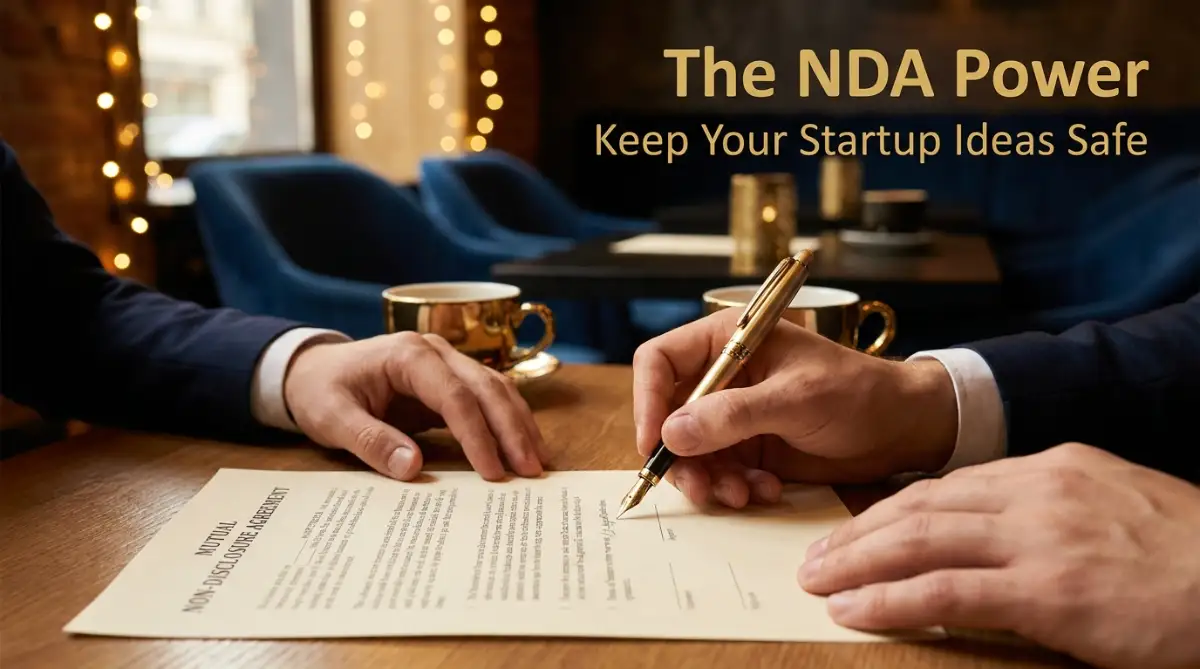
The very first shield you need to build is a solid Non-Disclosure Agreement. Most people just call this an NDA. This is simply a legally binding contract that creates a confidential relationship between you and another person.
When you share your business secrets, the other party promises not to share or use that information for their own gain. It is a very simple concept, but it holds massive power in the real business world.
Imagine you have a fantastic idea for a new mobile app, and you need to hire a developer to build a prototype. If you just send them your blueprints via email, they can easily build the app themselves and claim the idea was theirs. An NDA prevents this exact disaster from happening.
By forcing the developer to sign an NDA before you share the details, you immediately establish legal ownership of the concept. If they try to steal it, you have clear written proof that they broke a confidential agreement. This single piece of paper is enough to scare off most potential thieves.
You should always use an NDA when discussing your business with potential investors, freelance designers, or business partners. It sets a highly professional tone from the very first interaction. It tells the other person that you take your business seriously, and you will protect your assets.
Own What You Pay For: The Independent Contractor Agreement
This next document is where almost every single solo founder makes a devastating mistake. As a one-person business, you will inevitably need to hire outside help. You might hire someone to design your logo, write your website copy, or take product photos.
Here is a terrifying legal reality that most people do not know. If you do not have a specific written contract, the person who creates the work automatically owns the copyright to it. Yes, even if you paid them thousands of dollars for the work!
If you pay a freelance graphic designer to create a logo for you without a proper contract, they still legally own that logo. They could technically sell it to your biggest competitor the next day. To prevent this, you absolutely need an Independent Contractor Agreement.
Inside this agreement, there must be a specific clause called a "Work-for-Hire" provision. This clause clearly states that all rights, titles, and interests in the final product belong entirely to you. You are buying the full ownership of the intellectual property, not just a license to use it.
I learned this the hard way when I first started out. I paid a talented writer to create an amazing e-book for my website. Because I didn't use a Work-for-Hire agreement, she eventually republished the exact same e-book on her own site, and I had absolutely no legal power to stop her. It was a painful, expensive lesson that completely changed how I run my business.
Always ensure both you and the freelancer sign this document before any work actually begins. It clarifies exactly who owns the final deliverables. It also outlines the payment terms, deadlines, and project scope, which prevents messy arguments later on.
The Ultimate Shield: Understanding Trademarks
Let's talk about the absolute face of your business. Your brand name, your logo, and your catchy slogans are all part of your core identity. These elements help your customers recognize you in a crowded market.
A trademark is a specific legal protection granted by the government. It gives you the exclusive right to use a specific name or logo in connection with your specific goods or services. It is the ultimate tool to stop copycats in their tracks.
Many beginners think that simply registering a domain name or a social media handle gives them legal ownership of a brand name. This is a very common and dangerous myth. A domain name only stops someone from using that exact web address.
Myth vs. Reality: Brand Protection
If you do not register a federal trademark, another company can start using your exact business name. Worse, they could register the trademark themselves and force you to change your name entirely. Imagine having to throw away all your branded packaging, rewrite your website, and confuse all your loyal customers.
Filing for a trademark can take several months, but the peace of mind is entirely worth the wait. It creates a public record of your ownership. If someone tries to copy your branding, a simple cease-and-desist letter backed by a registered trademark is usually enough to shut them down immediately.
Locking Down Your Content: The Copyright Notice
While trademarks protect your brand identity, copyrights protect the actual creative work you produce. If you are a solo entrepreneur who creates courses, writes a popular blog, records podcasts, or designs digital templates, copyright law is your best friend.
The good news is that your work is technically protected by copyright the exact moment you create it and save it on your computer. However, enforcing that protection against thieves requires a bit more active effort on your part.
At the bare minimum, you need to display a proper Copyright Notice on all your original materials. This is incredibly easy to do. It simply consists of the copyright symbol (©), the current year, and the name of your business.
You should place this notice in the footer of your website, on the title page of your e-books, and at the end of your video presentations. This simple line of text serves as a loud warning to the public. It tells everyone that your work is legally protected and you will not tolerate unauthorized copying.
If your core business relies heavily on selling digital products or written content, you should take things a step further. Registering your most valuable work with the official government copyright office provides massive legal benefits. If someone steals registered work, you can actually sue them for significant financial damages.
Protecting Your Internal Playbook: The Operations Manual
There is one type of intellectual property that people rarely talk about. It is the internal systems, processes, and unique methods you use to deliver your services. This is often called your "Trade Secret" or your secret sauce.
Maybe you have a highly efficient way of onboarding new clients. Perhaps you have a custom spreadsheet formula that saves hours of data entry. These processes give you a massive competitive edge in the market.
To protect these secrets, you need to document them properly in an internal operations manual. Every time you bring on a temporary assistant or a virtual helper, they must agree in writing to keep these specific processes entirely confidential.
Do not just assume people know what is supposed to be a secret. Clearly label these documents as "Confidential Business Property". When you combine clear documentation with a strong NDA, you build a fortress around the way you do business.
You have worked incredibly hard to build your solo enterprise from the ground up. You have sacrificed your free time, your energy, and your money to turn your ideas into a real, breathing business. Do not let a simple lack of paperwork be the reason you lose it all.
Taking control of your legal documents is actually an incredibly empowering experience. It shifts your mindset from being a vulnerable beginner to a serious, protected business owner. You stop operating out of fear and start operating with deep confidence.
You can finally stop looking over your shoulder. You can aggressively market your products, pitch your brilliant ideas, and hire the best freelancers without a single drop of anxiety. This is what true business freedom actually feels like.
Leveling Up Your Defense: Expert Tactics for Long-Term Asset Security
Now that you understand the basic shields, it is time to shift your mindset from pure defense to active offense. Gathering your paperwork is just the very first step of the journey. To truly secure your solo empire for years to come, you need a reliable system that works quietly in the background.
Think of your intellectual property exactly like a physical garden. You cannot just plant a seed, walk away, and expect it to survive on its own. You have to constantly pull weeds, water the soil, and protect the boundaries from outside pests.
Most beginners set up their contracts once and comple