
Why I Almost Gave Up on Artificial Intelligence (And Why You Shouldn't)
I still clearly remember the exact evening I decided I was finally going to learn everything about artificial intelligence. I brewed a fresh cup of coffee, opened up a highly recommended online course, and felt incredibly motivated to master this fascinating technology. But less than ten minutes into the very first video, my excitement completely vanished. The screen was suddenly covered in strange Greek letters, massive calculus equations, and formulas that looked like alien writing to me.
I honestly felt an immediate knot in my stomach. I paused the video, stared at the screen, and started questioning my own intelligence. "Am I just not smart enough for this?" I asked myself out loud. I have a background in writing and basic business, not advanced computer science or statistics. The heavy math instantly made me feel like an absolute outsider in a club I desperately wanted to join.
So, I did what most normal people do when they feel overwhelmed. I closed the laptop, walked away, and completely abandoned my dream of understanding the future of technology. For weeks, I carried this heavy, uncomfortable feeling of failure and frustration. I felt completely left out of the biggest technological shift of our generation just because I could not solve complex calculus problems.
This is the same quiet struggle happening to thousands of bright, creative people every single day. You hear everyone talking about smart algorithms shaping our lives, but the moment you try to look under the hood, a giant wall of numbers blocks your path. It is incredibly demoralizing to feel like you are being left behind in your career simply because traditional education insists on overcomplicating everything.
The fear of math literally steals away your mental peace and confidence. It makes you feel incredibly helpless when you are asked about new technology at work, forcing you to stay quiet in important conversations. You start believing the lie that only math geniuses can understand how modern software actually works.
But then, one random afternoon, a completely unexpected conversation changed my entire perspective. I realized I was trying to learn the mechanics of the engine when all I actually needed to know was how to drive the car.
The Big Secret Nobody Tells Beginners About Algorithms
I eventually discovered something that most university professors simply refuse to admit. You absolutely do not need to be a math genius to deeply understand how these systems operate. The secret is that artificial intelligence is mostly just simple human logic hidden behind a curtain of fancy terminology.
When you remove the intimidating numbers, what is left is simply a unique way of solving everyday problems. Think about how you naturally learned to ride a bicycle as a child. Did you sit down and calculate the exact physics of gravity, wind resistance, and balance equations? Of course not.
You learned purely through trial, error, and adjusting to your mistakes over time. If you leaned too far to the left and fell down, your brain quietly made a note to shift your weight to the right next time. You slowly recognized the pattern of balance through direct experience, entirely without a single mathematical formula.
This is exactly what we are asking computers to do today. We are finally stopping the old method of giving them strict, rigid rules for every possible scenario. Instead, we are just giving them a massive amount of experiences and asking them to find the winning pattern. Once you view the technology through this simple lens of human learning, the entire concept suddenly becomes incredibly approachable.
Why Traditional Programming Was Hitting a Brick Wall
To fully grasp the magic of modern systems, we first need to look at how we used to tell computers what to do. For decades, traditional programming worked exactly like following a very strict cooking recipe. A human programmer had to sit down and write out every single step in painstaking detail.
If you wanted a computer to sort your emails, you had to write a specific rule. "If the email contains the word 'lottery', put it in the spam folder." But spammers quickly got smarter and started spelling it "L0ttery" with a zero instead of an 'o'. The computer, strictly following the old rule, would completely miss it and let the spam right into your inbox.
The programmer would then have to go back, write another specific rule for the new spelling, and hope the spammers did not change their tactics again. This endless game of cat-and-mouse was exhausting, expensive, and incredibly inefficient. Humans simply could not write enough rules to cover every possible variation in the real world. We needed a completely different approach to problem-solving.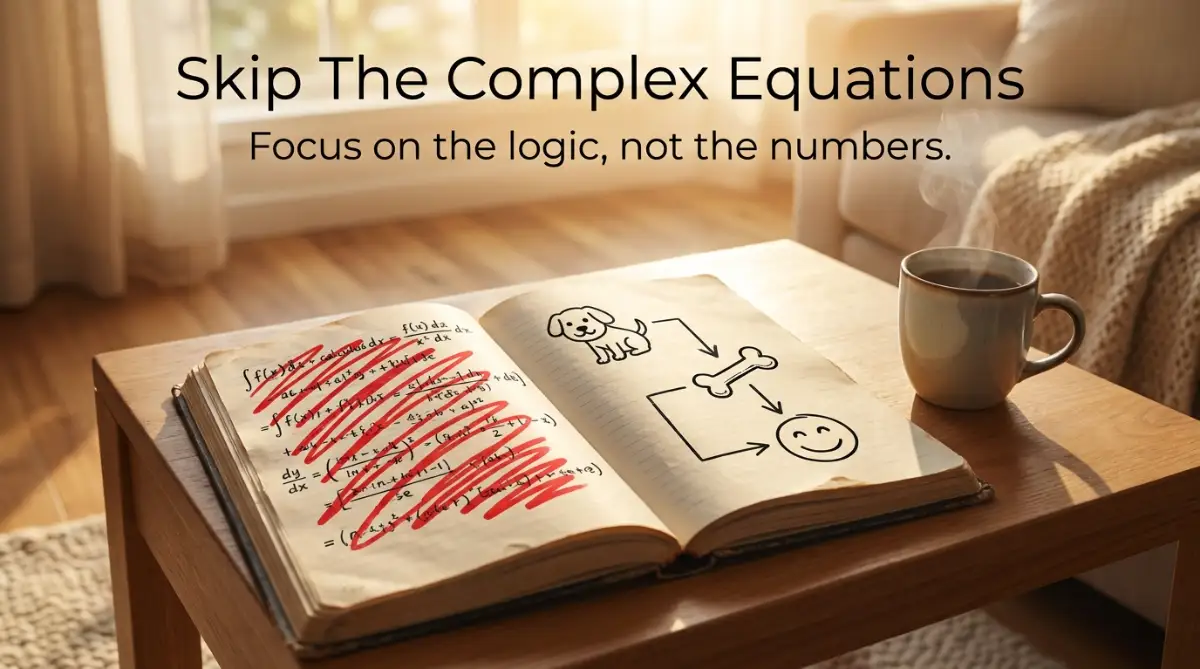
The Shift from Following Rules to Finding Patterns
This is the exact moment the technology shifted and became what we now call machine learning. Instead of writing endless lists of strict rules, scientists decided to try something entirely different. They wondered, "What if we just show the computer a million examples of spam emails, and let it figure out the common signs by itself?"
So, they fed the system massive piles of old data. Some emails were marked as 'Good', and some were marked as 'Spam'. The computer looked at the vast differences between the two piles. It noticed that spam emails often used excessive exclamation marks, weird capitalization, and specific pushy phrases.
The machine independently built its own internal set of rules based on the patterns it found in the examples. It successfully learned how to spot the bad emails without a human ever having to write a specific code for the word "L0ttery". This simple shift from 'following rules' to 'finding patterns' is the entire heartbeat of the industry.
How We Train the Invisible Brain: The Three Main Styles
Just like children learn differently depending on the subject, computers also have different ways of studying the world. Once you understand these distinct learning styles, everything you read in the news will suddenly make perfect sense. We generally break this down into three main categories of education.
I know the names sound a little bit technical at first glance, but I promise the actual concepts are brilliantly simple. We are going to look at them using everyday situations you already experience in your own home. By the end of this section, you will be able to confidently explain these concepts to your friends over dinner.
1. The Flashcard Method (Supervised Learning)
Imagine you are sitting with a young child, trying to teach them the names of different fruits. You hold up a bright red object and clearly say, "This is an apple." Then you hold up a curved yellow object and say, "This is a banana."
You repeat this process over and over, showing them pictures and instantly providing the correct answer. The child's brain connects the visual shape and color with the name you provided. Eventually, you can hold up a brand new apple they have never seen before, and they will excitedly yell, "Apple!"
This is exactly how Supervised Learning works. We feed the computer thousands of pictures of cats, and we strictly label every single picture as "Cat". We then show it pictures of dogs, labeled "Dog". The computer slowly learns the visual differences between pointy ears and floppy ears. Because we are acting as the supervisor and providing the correct answers, the machine learns with a high degree of safety and accuracy.
2. The Messy Closet Method (Unsupervised Learning)
Now, let us completely change the scenario. Imagine you have a giant box filled with hundreds of mixed-up Lego bricks scattered everywhere. I ask you to organize them, but I completely refuse to tell you what categories to use. I do not give you any labels, instructions, or hints.
You look at the chaotic pile and naturally start grouping things based on their similarities. You might decide to put all the red bricks in one corner, the blue ones in another, and the long pieces in the middle. You found hidden structure and order within the chaos entirely on your own.
This is the exact magic of Unsupervised Learning. We give the computer a massive amount of messy, completely unlabelled data. We do not tell it what it is looking at. We simply say, "Look at all this information and show me if anything naturally groups together."
Businesses use this method all the time to understand their customers better. A clothing store might feed all its sales receipts into a system. The computer might notice a hidden pattern: people who buy winter coats on Tuesdays also tend to buy thick socks. The store owners never knew this hidden connection existed until the computer grouped the behaviors.
3. The Puppy Training Method (Reinforcement Learning)
This third method is arguably the most exciting, and it looks exactly like training a new pet. When you want to teach a puppy to sit, you do not give them a lecture in English. You wait for them to accidentally perform the right action, and then you immediately reward them with a tasty treat.
If they jump on the couch instead, they get a stern "No" and absolutely no treat. The puppy quickly figures out a very simple strategy: doing the specific action that gets the treat is good, and doing anything else is bad. They are navigating the world purely through a system of rewards and penalties.
Reinforcement Learning works identically for computer programs. We drop a digital character into a video game environment and give it a simple goal, like reaching the end of a maze. Every time it takes a step forward, it gets a digital point. Every time it hits a wall, it loses a point.
Over millions of rapid attempts, the program learns to perfectly navigate the maze to maximize its high score. This exact trial-and-error reward system is how we teach smart robots to walk without falling over, and how autonomous cars learn to safely merge onto a busy highway.
My personal journey completely transformed once I finally stopped obsessing over the mathematical formulas and just focused on the broad concepts. I spent months beating myself up over calculus, completely ignoring the fact that understanding the 'why' is actually far more valuable than understanding the 'how'. If you just focus on the core logic of these analogies, you are already ahead of 90% of the population trying to understand this tech.
Why Data is the Ultimate Fuel for the Engine
None of these amazing learning styles matter at all if we do not have the right ingredients to feed the system. You might have the most expensive, perfectly engineered sports car in your driveway, but it is not moving an inch without quality gasoline. In the world of artificial intelligence, high-quality data is the only fuel that truly matters.
Every time you click a 'Like' button, stay on a video for five extra seconds, or add an item to your online shopping cart, you are creating a tiny drop of fuel. You are quietly telling the algorithms what you prefer, what you hate, and how you behave under certain conditions. The computer eagerly scoops up all these tiny actions and adds them to its massive learning library.
However, there is a very dangerous trap hidden inside this process that we need to talk about. If you feed an algorithm bad, biased, or incomplete information, it will confidently give you a terrible result. This is a famous concept known among experts as 'Garbage In, Garbage Out'.
Imagine trying to teach a machine what a 'shoe' looks like, but you only ever show it pictures of high heels. When you finally show it a regular running sneaker, the computer will reject it because it thinks all shoes must have a tall, pointy heel. The machine is not intentionally being foolish; it is just perfectly reflecting the limited worldview we gave it.
Breaking Down the Scary "Black Box" Problem
As you get more comfortable with these ideas, you will frequently hear people complaining about something called the "Black Box". It sounds incredibly mysterious, but it is actually a very straightforward frustration that even top scientists deal with daily.
When you use the Flashcard method or the Puppy Training method on massive scales, the computer builds millions of tiny internal connections. It starts recognizing patterns that are so complex and deeply layered that human brains literally cannot follow the logic anymore. We can easily see the data going in, and we can clearly see the accurate answer coming out.
But the actual decision-making process happening in the middle? It becomes completely invisible to us, trapped inside a dark box we cannot look into. For example, a medical algorithm might look at a patient's X-ray and correctly predict a hidden illness with shocking accuracy. But when doctors ask the computer, "Exactly why did you make that prediction?", the machine cannot explain its reasoning.
This creates a massive trust issue in serious real-world situations. Would you feel comfortable going to jail because a smart computer predicted you might commit a crime, but the judge couldn't explain how it reached that conclusion? This is why understanding the basic mechanics of these tools is no longer just a fun hobby for tech geeks.
It is a necessary survival skill for everyday citizens. When we know how the magician performs his tricks, we are much less likely to be fooled by the illusion. We need normal, non-mathematical people involved in these conversations to ensure these systems remain fair, transparent, and genuinely helpful to society.
You have already taken the biggest, most difficult step simply by choosing to look past the scary math and focus on the logical reality. Now we'll move into the practical steps you can take today to implement this knowledge in your everyday workflow. You are about to see just how incredibly accessible this technology has truly become for the average person.
Watch this incredibly simple and eye-opening breakdown of how machines actually learn through simple human logic, and you will never look at AI the same way again.
Building Your Strategy: How to Actually Master AI Logic in Your Free Time
Now that we have successfully removed the terrifying math from the equation, you need a realistic game plan. Reading about these concepts is a great first step, but actually internalizing them requires a bit of active practice. You do not need to enroll in an expensive boot camp or spend hours listening to boring lectures.
You simply need to change the way you observe the digital world around you. Most people passively consume technology without ever stopping to think about how it actually functions behind the scenes. If you want to truly grasp how these smart systems operate, you have to start thinking like a detective in your own home.
Building a strong foundation in this topic is very much like building a