

The Hidden Heavy Toll of Sleepless Nights
I remember staring at the ceiling at 3:00 AM, feeling completely exhausted but entirely wide awake. My mind would race through a hundred random thoughts, from embarrassing memories to my grocery list. It felt like a sick joke my brain was playing on me every single night. I tried everything to shut off my thoughts, but nothing seemed to work for my stubborn insomnia. The worst part was watching the clock tick, calculating how few hours of sleep I would get before my alarm went off.
I was absolutely desperate for a normal night of rest without feeling groggy from sleeping pills. If you are reading this, I know exactly how frustrated and tired you feel right now. The constant tossing and turning can make you feel completely isolated in the middle of the night.
Lack of sleep drains your energy, ruins your mood, and makes simple daily tasks feel incredibly heavy. You wake up feeling like a zombie, chugging coffee just to survive the morning. It steals your peace of mind and leaves you dreading bedtime instead of looking forward to it.
The reality of living with chronic sleeplessness is incredibly harsh. It affects your performance at work and can easily put a strain on your relationships. You might find yourself snapping at your loved ones over small things simply because your brain is running on empty.
This is exactly why finding a natural, effective solution is so important for your overall well-being. The good news is that you do not need expensive gadgets or heavy medication to fix this. You just need a smart, predictable evening routine that tells your body it is time to shut down.
The Biological Trigger: Why Your Brain Stays Awake
Before we look at the exact habits to adopt, we need to understand what is happening inside your body. Your brain has an internal clock called the circadian rhythm. When the sun goes down, your body is supposed to produce melatonin, the hormone that makes you sleepy.
However, modern life completely confuses this natural biological system. We flood our eyes with artificial light and keep our brains highly stimulated until the exact second we try to sleep. You cannot drive a car at a hundred miles per hour and expect it to stop instantly without hitting the brakes first.
Your brain works the same way. You need a transition period to slow down, shift gears, and prepare for rest. This transition period is what we call a wind-down routine, and it is the foundation of natural sleep recovery.
Creating Your Digital Sunset
The single biggest enemy of natural sleep is the glowing rectangle in your pocket. Blue light from smartphones, tablets, and televisions tricks your brain into thinking it is still daytime. This completely blocks your natural melatonin production, leaving you feeling wired and restless.
If you want to fall asleep naturally, you have to create a "digital sunset" in your home. Start by turning off all screens at least one to two hours before your target bedtime. I know this sounds impossible at first, but the results are truly life-changing.
Instead of scrolling through social media, use this time to do something that does not involve a screen. You can read a physical book, listen to a calming podcast, or just sit quietly with your thoughts.
Here is a Pro Tip from my own experience: I used to cheat by saying I was just going to check my emails one last time in bed, which always kept me awake for another hour. Now, I leave my phone charging in the kitchen overnight, and it has completely cured my late-night doom-scrolling habit.
If you absolutely must use a device for work or emergencies, wear amber-tinted blue-light-blocking glasses. You should also turn your phone screen to the warmest color setting available to reduce the glare.
Cooling Down the Environment: The Cave Method
Think about how humans used to sleep thousands of years ago in the wild. They slept in caves or under the stars, where it was completely dark and reasonably cool. Your body temperature naturally drops a few degrees when it is time to drift off.
If your bedroom is too warm, your body fights this natural process, leading to a night of kicking off the covers. The ideal sleeping temperature for most adults is between 60 and 67 degrees Fahrenheit.
Try lowering your thermostat about an hour before you plan to get into bed. You can also use breathable cotton or bamboo sheets to keep your body pleasantly cool throughout the night. A cool room paired with a warm blanket creates a cozy nesting feeling that signals safety to your nervous system.
Another great trick is taking a warm bath or shower about ninety minutes before bed. When you step out of the warm water into a cool room, your body temperature drops rapidly, which makes you feel instantly drowsy.
The Brain Dump: Clearing Mental Clutter
A racing mind is the most common reason people cannot fall asleep quickly. You lie down, and suddenly your brain decides it is the perfect time to plan next week's busy schedule. To stop this from happening, you need a strategy to get those stressful thoughts out of your head.
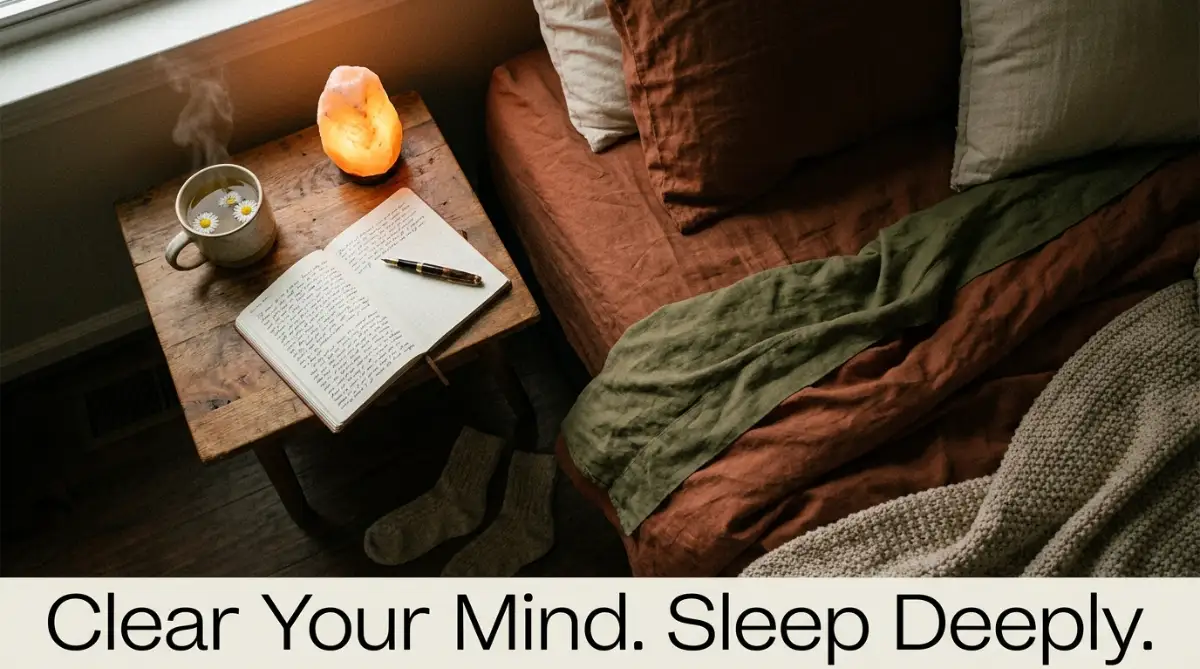
This is where the "Brain Dump" technique becomes incredibly useful for chronic overthinkers. Keep a small notebook and a pen permanently resting on your nightstand. About thirty minutes before you want to sleep, write down everything that is bothering you.
Make a quick list of your tasks for the next day or write out any lingering frustrations. By putting these thoughts on paper, you are giving your brain permission to stop holding onto them.
It is exactly like closing all the open tabs on your messy computer browser. Once the tasks are safely written down, your mind feels secure enough to finally relax. You will be surprised by how much lighter you feel when your worries are trapped on paper instead of bouncing around in your skull.
Gentle Physical Decompression
Stress does not just live in your mind; it gets heavily trapped in your physical muscles too. If your neck, shoulders, or back are tense, your body will stay in a state of high alert. You simply cannot force yourself into deep rest while your muscles are tightly clenched.
Light, restorative stretching can bridge the gap between a highly stressful day and a peaceful night. Try doing some simple forward folds, gentle neck rolls, or the child's pose right beside your bed.
These movements should not make you sweat; they are merely meant to release built-up physical tension. Hold each stretch for about thirty seconds while taking slow, deep, intentional breaths.
Focus entirely on the physical sensation of your tight muscles slowly letting go. This physical release sends a powerful message to your nervous system that you are safe and out of danger.
The Power of Scent and Sound
Your senses play a massive role in how relaxed you feel at night in your bedroom. Creating a specific sensory experience can quickly condition your brain to expect sleep on command. Aromatherapy is a fantastic, completely natural tool for achieving this state.
Essential oils like lavender, chamomile, and cedarwood have scientifically proven relaxing properties for the human body. You can put a few drops of high-quality lavender oil in a water diffuser in your room.
Alternatively, you can lightly spray a natural linen mist directly onto your soft pillows. Over time, your brain will deeply associate that specific smell with falling asleep comfortably. As soon as you smell the lavender, your eyelids will naturally start to feel heavy and tired.
Sound is equally important for creating a sleep-friendly environment free from sudden distractions. Total silence can sometimes be deafening, making you hyper-aware of your own heartbeat or racing thoughts.
Try using a white noise machine or playing a track of gentle rain sounds on a low volume. Pink noise and brown noise are also incredibly effective at masking disruptive background sounds like loud traffic or barking dogs.
Crafting a Smart Caffeine and Alcohol Strategy
What you put into your body during the bright daylight hours drastically affects your evening routine. Caffeine is a massive hidden obstacle for millions of people struggling with natural rest. Caffeine has a biological half-life of about five to six hours in the human body.
This means it stays active in your system long after you take your last sip of coffee. If you drink a strong cup of coffee at 4:00 PM, half of that caffeine is still keeping your brain alert at 10:00 PM. Make a strict, unbreakable rule to stop consuming all caffeine by 12:00 PM or 1:00 PM at the latest.
This includes hidden sources like soda, energy drinks, green tea, and even certain types of dark chocolate. Similarly, many people mistakenly use a glass of wine to help them feel drowsy in the evening.
While alcohol might help you pass out initially, it absolutely destroys your overall sleep quality. It blocks you from entering REM sleep, which is the deep, restorative phase your brain desperately needs to heal.
You will likely end up waking up at 3:00 AM feeling uncomfortably hot, dehydrated, and highly anxious. Instead of an alcoholic nightcap, try brewing a warm, soothing cup of herbal tea. Chamomile, valerian root, or passionflower teas are wonderful, natural alternatives that calm your nervous system without the bad side effects.
If you are struggling to build a bedtime environment that actually puts you to sleep, watch this amazing visual guide that explains the exact room setup for maximum relaxation.
Managing Your Indoor Evening Light Exposure
We already talked about glowing screens, but the bright overhead lighting in your home is just as disruptive. Bright, white LED lights trick your internal biological clock into thinking the sun is still shining high in the sky. As soon as the sun sets outside, you should immediately change the lighting inside your house.
Turn off the harsh overhead lights and switch entirely to low-level floor or table lamps. Use light bulbs that emit a warm, amber, or orange glow rather than cool blue or stark hospital-white light.
This directly mimics the soft light of a natural fire, which our ancestors used every night before bedtime. If you have dimmer switches installed, lower the brightness of your room by at least fifty percent after eating dinner.
This gradual, predictable darkening of your environment perfectly matches the natural setting of the sun outside. By the time you actually pull back the covers and get into bed, your room should be as close to pitch-black as possible. Use high-quality blackout curtains or a comfortable sleep mask to block out annoying streetlights and passing car headlights.
The Simple 3-2-1 Evening Formula
If you feel slightly overwhelmed by all these steps, there is a very simple framework you can easily follow. It is widely known among health experts as the 3-2-1 rule for getting much better rest.
Three hours before bed, stop eating heavy, spicy meals and completely stop drinking alcohol. Digestion takes a huge amount of energy, and lying flat on a full stomach often causes acid reflux and discomfort.
Two hours before bed, stop doing any stressful, brain-heavy work. This means no checking work emails, no paying complicated bills, and no intense arguments or deep problem-solving.
One hour before bed, strictly stop looking at all digital screens of any kind. Begin your relaxing wind-down routine of reading a book, stretching your body, or listening to calm acoustic music.
This clear, predictable timeline deeply helps train your body to expect sleep at the exact same time every single night. Routine consistency is the ultimate secret to fixing a broken sleep schedule forever.