

Waking Up to the Same Old Nightmare (My Honest Story)
I remember waking up on a beautiful Tuesday morning, only to feel that familiar, terrifying throb behind my left eye. My heart sank instantly because I knew exactly what was coming next. The whole day was ruined before it even started, and I felt completely helpless.
For a long time, this invisible enemy controlled my daily schedule, my mood, and my relationships. I would cancel fun plans at the last minute, forced to lie in a pitch-black room with an ice pack pressed hard against my head. It felt incredibly unfair to watch my friends enjoy their weekend while I suffered in absolute silence.
Every single time I tried to plan a vacation or a simple dinner date, the fear of an unexpected attack haunted me. I was constantly walking on eggshells around my own body. Normal life just stops when an attack hits, leaving you physically drained and emotionally broken.
The worst part was the heavy guilt I carried for always letting my family and coworkers down. People who do not experience these severe headaches simply do not understand the blinding pain and the intense nausea. They often brush it off as just a regular headache, which makes the isolation feel even worse.
I missed out on so many beautiful life moments simply because my brain decided to react violently to an unknown cause. My mental peace was completely shattered, replaced by a constant state of anxiety and dread.
However, everything began to shift when I finally stopped looking for a magic pill and started listening to my body. I realized that my body was sending me clear warning signs long before the actual pain started. By learning how to spot these sneaky warnings, I slowly started taking my life back.
Decoding Your Brain's Invisible Warning Signals
To truly stop this exhausting cycle, we need to understand how our brain reacts to the world around us. Think of your brain as a small, delicate cup sitting on a table. Every small stressor, bad meal, or bright light adds a little bit of water to that cup.
When the cup finally overflows, the blinding pain instantly begins. Our main goal is not to empty the cup, because that is impossible. Instead, we want to keep the water level low enough so it never spills over the edge.
Managing your personal limits is the smartest way to keep your nervous system calm and happy. Let us look at some highly practical ways you can start protecting your energy and managing these daily stressors right now.
The Food and Drink Connection (What You Eat Matters)
Your daily diet plays a massive role in how your nervous system behaves. Many common foods contain natural chemicals that can easily shock a sensitive brain. Aged cheeses, processed meats, and foods heavy in MSG are famous for starting the pain cycle.
A lot of people rely heavily on strong coffee to get through their morning routine. However, wild swings in caffeine intake can easily confuse your blood vessels. If you drink three cups on Wednesday and none on Thursday, your brain will likely punish you for the sudden change.
Instead of completely banning your favorite foods, try focusing on consistency. Keep your blood sugar perfectly stable by eating small, balanced meals throughout your busy day. When you skip meals, your blood sugar drops, sending a massive panic signal directly to your head.
I used to think skipping breakfast was a great way to save time before rushing to the office. But I quickly realized it was my biggest morning enemy, as my blood sugar would drop, and by noon, my head was pounding uncontrollably. Now, I never leave the house without at least eating a handful of raw almonds or a banana.
Hydration is Your Best Natural Defense
We hear it all the time, but drinking plain water is genuinely your best defense mechanism. Your brain tissues need plenty of water to function without strain. Even a tiny drop in your hydration levels can cause those sensitive tissues to shrink away from your skull slightly.
This tiny shrinkage creates a massive pulling sensation, which triggers immediate throbbing. By the time you actually feel thirsty, your body is already in a state of mild panic.
You should carry a large, reusable water bottle with you everywhere you go. Add a tiny pinch of natural sea salt or a slice of fresh lemon to help your cells absorb the moisture better. Making this one simple change can drastically lower the number of bad days you experience each month.
Environmental Sneak Attacks
Sometimes the enemy is completely invisible, hiding in the air we breathe or the lights we see. Fluorescent office lights and endless computer screens constantly bombard our eyes with harsh, unnatural glare. This harsh lighting easily strains the optic nerve, sending immediate distress signals backward into the brain.
Strong smells are another incredibly common culprit that many people ignore. A coworker's heavy perfume, strong cleaning chemicals, or even the smell of fresh paint can overwhelm your sensory system.
To protect yourself, you can wear blue-light-blocking glasses whenever you stare at a screen for more than twenty minutes. If you work in a bright office, ask to sit near a natural window or bring a small desk lamp with a warm, soft bulb. Controlling your immediate environment is a powerful way to keep your daily stress levels down.
The Powerful Sleep-Stress Cycle
Sleep is the only time your brain gets to physically wash away the harmful toxins built up during the day. If you constantly interrupt this natural cleaning process, your brain remains highly inflamed and angry. Going to bed at midnight one night and 9 PM the next destroys your internal biological clock.
You must train your body to sleep and wake up at the exact same time every single day, even on weekends. Create a relaxing, dark, and cool environment in your bedroom to signal to your body that it is safe to rest.
Stress is the ultimate amplifier for any physical pain you experience. When you carry emotional tension, you automatically clench your jaw and tighten your neck muscles without realizing it. This heavy physical tension slowly creeps up the back of your head, creating a perfect storm for an attack.
Practicing gentle, deep belly breathing for just five minutes a day can completely reset your nervous system. You do not need to be a meditation expert to see massive results. Just sit quietly, close your eyes, and take slow breaths to tell your brain that you are safe.
Keeping a Detailed Detective Log
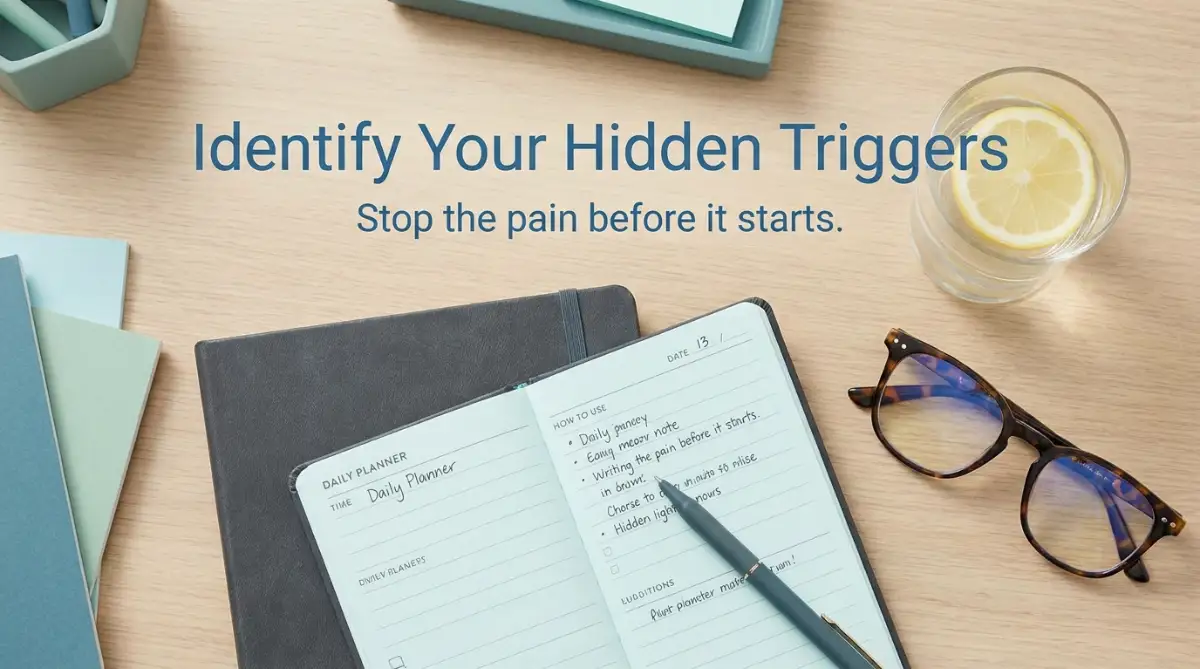
You cannot defeat an enemy if you do not know where they are hiding. Keeping a detailed daily log is the most effective tool you will ever use in this journey. You need to write down exactly what you ate, how you slept, and what the weather was like right before an attack started.
After just a few weeks of simple tracking, you will start to see obvious patterns jumping off the page. Maybe you will notice that eating chocolate only hurts you when you are also sleep-deprived. This proves that combining multiple small triggers is what actually causes the overflow.
You can use a simple paper notebook or a free app on your phone to track these daily habits. The goal is not to become obsessed, but to become highly aware of your unique personal limits.
Myth vs Reality: Understanding the Truth
There is a lot of confusing advice out there, which makes finding real relief very frustrating. Let us clear up some common misunderstandings right now.
Myth: You must completely avoid all sugar and caffeine forever to stay pain-free.
Reality: Complete restriction often causes more stress. Moderation and strict consistency are much more effective than completely banning things you love.
Myth: If a trigger does not cause pain immediately, it is totally safe.
Reality: Many reactions are heavily delayed. Something you eat on Monday morning might not actually cause an attack until Tuesday evening.
Myth: Only prescription medicine can stop the throbbing once it starts.
Reality: Catching the very early warning signs allows natural methods like ice therapy and deep rest to stop the cycle before it peaks.
Smart Substitutions for Everyday Life
Making sudden, massive lifestyle changes is usually a recipe for failure. Instead of trying to fix everything in one single day, focus on making tiny, smart swaps. Below is a simple guide to help you replace common risky habits with much safer alternatives.
Weather Changes and Barometric Pressure
Some things are entirely out of our control, like the sudden shift in the weather. A massive drop in barometric pressure right before a heavy rainstorm acts as a huge trigger for thousands of people. The sudden pressure change outside causes the pressure inside your sinus cavities to feel unbalanced.
While you cannot stop a thunderstorm, you can definitely prepare your body for it. If you see dark clouds rolling in, immediately increase your water intake and avoid hard physical exertion.
Some people find incredible relief by using a warm compress on their face when the weather shifts quickly. Being proactive instead of reactive gives you a massive advantage over unpredictable weather patterns.