

The Hidden Struggle Behind My Daily Stomach Troubles
I still clearly remember the mornings when waking up felt like a punishment. Before my feet even touched the floor, a heavy, uncomfortable bloating would take over my entire stomach. I felt completely trapped inside my own body, constantly exhausted no matter how many hours I slept. Every single meal felt like a stressful guessing game of what would upset my stomach next. My social life disappeared because I was always too tired or too worried about finding the nearest restroom. I honestly thought I just had to live with this low energy and constant discomfort forever.
But the reality is, I was not alone in this exhausting daily battle. Millions of people walk around every single day carrying this same silent burden. You might be one of them, pretending everything is perfectly fine while secretly dealing with stomach cramps, unexpected weight changes, or sudden skin breakouts.
The emotional toll of these digestive issues is incredibly heavy. It drains your confidence and leaves you feeling anxious before you even step out of the house. You start turning down dinner invitations with friends, simply because the anxiety of eating the wrong thing is too high.
This constant worry slowly chips away at your overall mental peace. It makes it nearly impossible to focus on your work or be fully present with your family.
Many people spend a fortune on random supplements or highly restrictive diets out of pure desperation. They cut out entire food groups, hoping for a magical fix, only to feel even more frustrated when the bloating returns a week later.
The hardest part is when doctors tell you that nothing is physically wrong with you. They suggest it might just be stress, leaving you feeling entirely unheard and dismissed. You know your body best, and you know this constant sluggishness is not normal.
Understanding Your Internal Ecosystem
To truly fix this problem, we have to look closely at what is happening inside your stomach. Think of your digestive tract as a massive, bustling garden filled with trillions of tiny living organisms. These microscopic helpers make up what scientists call the gut microbiome.
When this internal garden is thriving, your digestion works smoothly, your immune system is strong, and your energy levels remain incredibly high. The good bacteria act like diligent gardeners, pulling nutrients from your food and keeping harmful bugs away.
However, when bad habits or poor diets take over, weeds begin to grow in this garden. The bad bacteria multiply rapidly, overpowering the helpful ones. This imbalance is exactly what causes the sudden bloating, the embarrassing gas, and the persistent brain fog.
Getting this ecosystem back in order does not require expensive medical treatments or extreme starvation diets. It simply requires making highly intentional, natural choices that support the good bacteria you already have.
Identifying the Everyday Enemies of Your Digestion
Before you can start planting new seeds in your internal garden, you must stop pouring poison on the soil. Most people completely overlook the hidden enemies lurking in their daily routines.
Highly processed foods are the absolute biggest threat to your healthy bacteria. Items loaded with artificial preservatives and refined sugars specifically feed the bad bacteria, allowing them to multiply out of control.
Every time you consume heavily processed snacks, you are essentially launching an attack on your helpful microbes. Another massive hidden enemy is the overuse of common medications, especially antibiotics.
While antibiotics are incredibly helpful for severe infections, they do not distinguish between good and bad bacteria. They wipe out your entire digestive ecosystem, leaving your stomach totally defenseless.
Even chronic, unmanaged stress acts as a direct enemy to your digestion. When you are constantly stressed, your body diverts blood away from your stomach, completely halting the natural digestive process.
The Power of Prebiotics Over Probiotics
You have probably seen countless advertisements telling you to buy expensive probiotic pills. While probiotics are helpful, they are essentially useless if you do not feed them the right way.
This is where prebiotics come into play. Prebiotics are simply types of dietary fiber that the human body cannot digest on its own.
Instead of breaking down this fiber, your body sends it straight to your lower digestive tract. Once there, your good bacteria feast on this fiber, growing stronger and multiplying naturally.
If you just take a probiotic pill without eating prebiotic fiber, those new bacteria will simply starve and die off. You need to provide them with the fuel they need to survive and thrive.
Some of the absolute best natural sources of prebiotic fiber are already sitting in your kitchen. Garlic, onions, asparagus, and slightly unripe bananas are incredibly powerful foods for your digestion.
Here is a quick breakdown to help you understand the difference easily:
I used to spend so much money on fancy probiotic supplements, thinking they would magically cure my bloating overnight. I completely ignored my actual diet, relying on fast food while popping those expensive pills. My stomach issues didn't change one bit until I finally stopped wasting money on supplements and started eating real, fiber-rich foods like garlic and oats every single day.
Introducing Fermented Foods Naturally
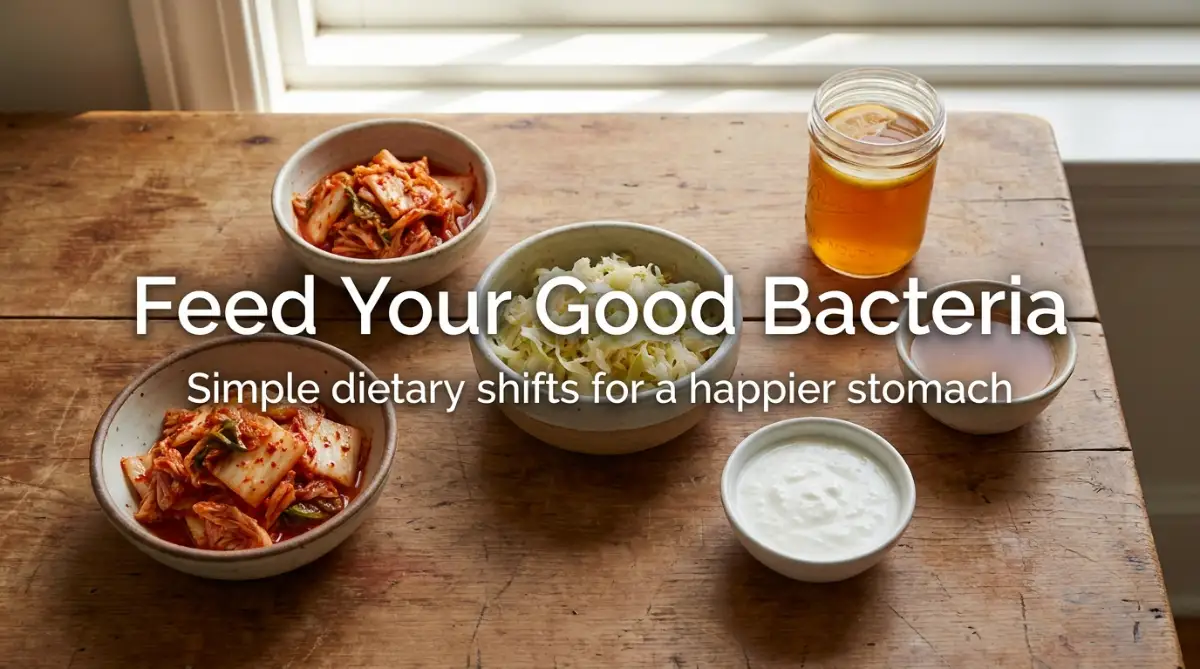
Once you start feeding your existing bacteria with prebiotics, it is time to slowly introduce new, healthy microbes. Fermented foods are nature's original probiotic supplements.
Thousands of years ago, before modern refrigeration existed, people used fermentation to preserve their vegetables and dairy. This natural process creates a massive amount of beneficial bacteria.
Foods like natural yogurt, kefir, and traditional kimchi are packed with living organisms. Eating just one small spoonful of real, unpasteurized sauerkraut can give you more healthy bacteria than an entire bottle of supplements.
The trick with fermented foods is to start very small. If you eat a massive bowl of kimchi on your first day, your stomach will likely rebel with intense gas and bloating.
Your digestive system needs time to adjust to this new influx of bacteria. Start with just one teaspoon of fermented food per day, and slowly increase the amount over a few weeks.
Mastering the Gut-Brain Connection
Have you ever felt "butterflies" in your stomach before a big presentation or a stressful event? That specific feeling is not just your imagination playing tricks on you.
Your stomach and your brain are physically connected by a massive communication highway called the vagus nerve. These two organs talk to each other every single millisecond of the day.
If your brain is feeling stressed and overwhelmed, it sends panic signals straight down to your stomach. This immediately slows down your digestion and changes the environment of your internal ecosystem.
Conversely, if your stomach is full of bad bacteria, it sends warning signals back up to your brain. This can directly cause feelings of deep anxiety, unexplainable sadness, and intense brain fog.
This means you cannot fully heal your digestion without actively managing your mental health. Taking time to slow down, breathe deeply, and relax is a highly effective digestive tool.
Simply taking five deep, slow breaths before you eat a meal can make a massive difference. This tells your nervous system that you are safe, allowing your body to properly digest the food on your plate.
Watch This Expert Explanation Before Making Dietary Changes
If you want to truly understand how these tiny microbes control your daily cravings and mood, this short video breaks down the science in a brilliantly simple way. It will completely change how you look at your next meal!
The Role of Hydration and Movement
People often search for complicated dietary secrets, completely ignoring the absolute basics of human health. Drinking enough clean water is incredibly essential for a healthy digestive lining.
Your stomach and intestines are coated with a thick layer of mucus that protects your internal organs from harsh stomach acid. This protective mucosal lining is made almost entirely of water.
When you are chronically dehydrated, this lining becomes dangerously thin, leading to irritation and painful inflammation. Drinking adequate water also helps move food smoothly through your digestive tract, preventing uncomfortable constipation.
Alongside hydration, gentle physical movement acts like a natural massage for your internal organs. You do not need to run a marathon to see the benefits of movement.
Taking a gentle fifteen-minute walk right after a heavy meal naturally stimulates your digestive muscles. This simple habit drastically reduces post-meal bloating and helps regulate your blood sugar levels.