
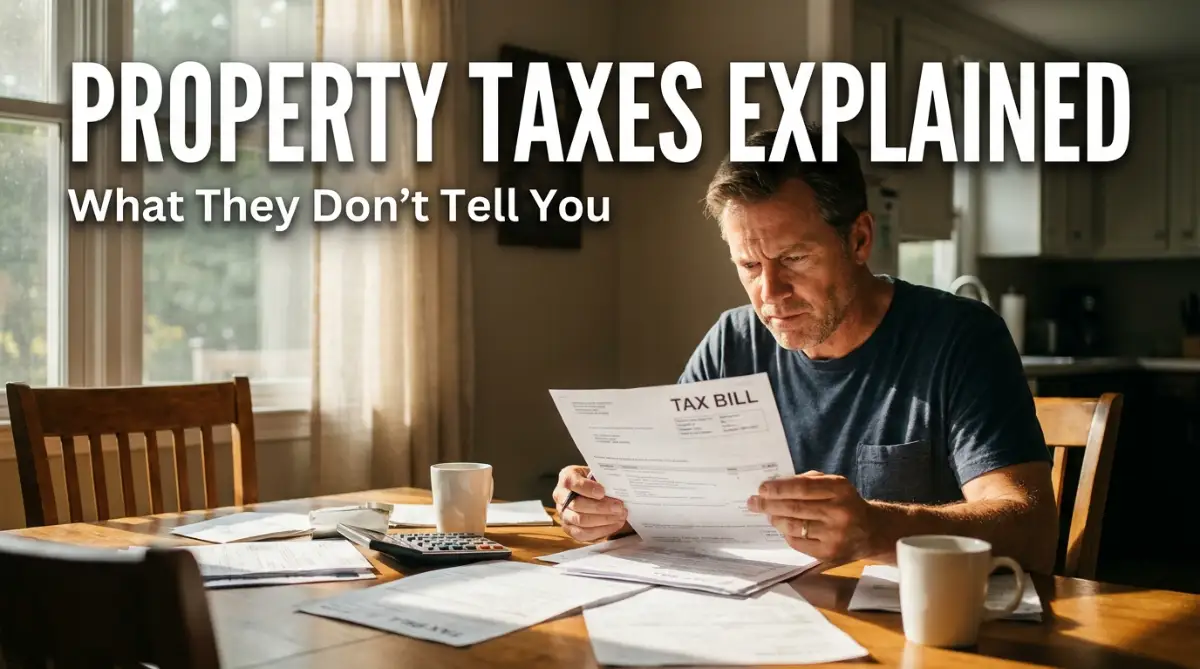
The Day I Almost Sold My House Over a Piece of Paper
I still remember the exact moment my heart dropped into my stomach while standing by my mailbox. I tore open a plain white envelope from the county assessor's office, expecting a routine update on my home. Instead, I saw a number that made my knees genuinely weak.
My annual property tax bill had seemingly doubled overnight without any warning. I immediately felt a cold wave of panic wash over me as I stared at the bold numbers printed at the bottom of the page.
I thought to myself, there is no way I can afford to keep living in my own home if this is what it costs now. I felt completely trapped by a system I did not understand, wondering if I had made a terrible mistake buying this house in the first place. My mind started racing with worst-case scenarios about draining my savings or even having to sell the property just to escape the financial burden.
For weeks, I lost sleep trying to figure out how regular families afford these unexpected spikes in their living expenses. Every time I looked at my budget, that giant tax number stared back at me, eating away at my peace of mind. I realized that millions of regular homeowners face this same terrifying situation every single year.
We work incredibly hard to buy a home, only to feel like we are constantly renting it from the local government. The sheer anxiety of not knowing how much your bill will jump next time creates a constant, nagging fear in the back of your mind.
It feels deeply unfair when you are trying your best to provide a stable life for your family, only to get hit with a bill that threatens your financial security. But as I started making phone calls and digging through local records, I realized something that completely changed my perspective on homeownership.
Breaking Down the Biggest Lies We Believe About Our Homes
Most of the fear we feel about our housing expenses comes directly from a lack of clear information. Local governments do not make their calculation methods easy for the average person to understand. They use confusing terminology, complicated math formulas, and extremely vague official letters.
Because of this confusing setup, homeowners naturally start believing things that simply are not true. We hear horror stories from our neighbors and automatically assume the worst about our own situations.
I want to completely shatter those false beliefs today and show you exactly how the system actually operates behind closed doors. Once you understand the basic mechanics of how your local county views your property, that overwhelming fear quickly turns into empowerment.
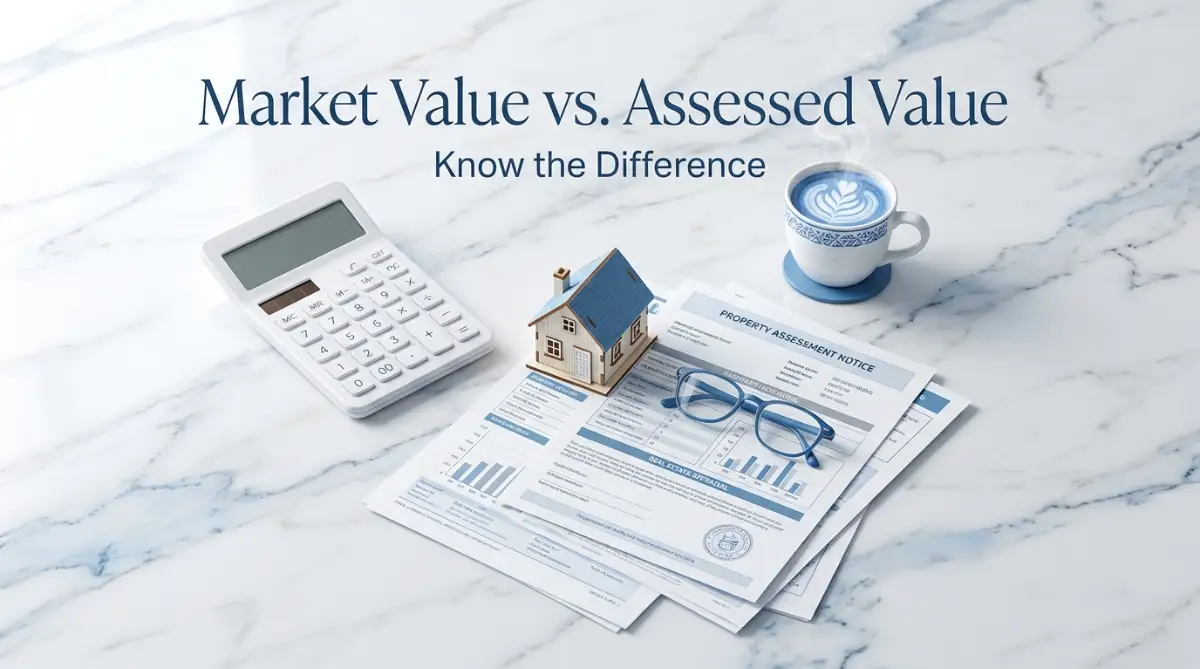
Myth 1: Your Assessed Value Is the Same as Your Market Value
This is easily the most widespread misunderstanding that causes unnecessary panic among property owners. When you see your home's "assessed value" printed on that terrifying letter, you probably assume that is what your house would sell for today.
You might even get upset thinking, "My house is not worth that much money right now!" Or conversely, you might panic because your assessment went up, thinking your taxes will instantly match that exact percentage increase.
The reality is entirely different and actually quite a bit more logical once you break it down. Market value is what a willing buyer would pay a willing seller on the open market right now. Assessed value is simply a standardized number the county uses specifically for calculation purposes.
In many local districts, the assessed value is legally required to be only a fraction of the actual market value. For example, your local government might assess homes at exactly 20 percent of their fair market value.
So, if your home could sell for $300,000, your assessed value might only show up as $60,000 on your official documents. When homeowners do not realize this fractional system exists, they completely misunderstand the math happening on their bill.
Myth 2: If Property Values Go Up, Your Bill Increases by the Same Amount
Let us look at a very common scenario that happens in growing neighborhoods. You notice houses down the street selling for record-high prices, and you instantly start dreading your next mail delivery.
You assume that because neighborhood values jumped by 30 percent, your next payment to the county will also jump by exactly 30 percent. This creates a terrible situation where people are actually unhappy that their largest financial asset is gaining worth.
This specific myth is completely false because it ignores the second half of the math equation: the millage rate. The millage rate is the actual tax rate set by your local schools, fire departments, and city councils based on their operating budgets.
Think of the total city budget like a giant restaurant bill, and all the homeowners are friends sitting around the table splitting that bill. If the restaurant bill (the city budget) stays exactly the same, but everyone suddenly has more money in their wallets (higher property values), the share you pay does not actually increase.
The city simply lowers the tax rate to ensure they only collect the exact amount of money they need to run the town. Therefore, a massive spike in your home's worth does not automatically equal a massive spike in what you owe.
The Truth About Adding Improvements to Your Home
Another major source of confusion surrounds home renovations and upgrades. People are absolutely terrified to build a new deck, finish their basement, or update their kitchen. They mistakenly believe that pulling a construction permit will instantly trigger the assessor to show up and double their annual fees.
Because of this fear, many families live in outdated, uncomfortable homes instead of making the upgrades they desperately want. I want you to feel confident making your house a comfortable home without living in constant fear of the local government.
While adding square footage or a new bathroom can add value, it rarely causes the catastrophic bill increase people imagine. Local assessors generally look at the overall condition and major structural features of a home.
They are not walking through your house checking if you upgraded your kitchen countertops from laminate to expensive granite. Routine maintenance like replacing an old roof, fixing broken windows, or painting your siding usually does not increase your assessment at all.
These are considered standard repairs necessary to maintain the current value of the home, not additions that dramatically increase its worth.
I actually learned this lesson the hard way a few years ago. I spent months avoiding a much-needed bathroom repair because I was paranoid about the county finding out and raising my rates. When I finally spoke to a local official, they laughed and told me they only care if I add completely new rooms or structures to the property. That simple conversation saved me so much unnecessary stress and finally allowed me to fix my home.
Uncovering the Hidden World of Legal Exemptions
Perhaps the saddest misconception is that the number printed on your bill is the final, non-negotiable amount you must pay. Most people simply write the check, feeling completely powerless, without realizing they are leaving hundreds or thousands of dollars on the table.
Local governments offer a wide variety of legal discounts, commonly known as exemptions, that drastically reduce what you owe. However, the catch is that they will rarely automatically apply these discounts for you. You have to actively raise your hand, fill out a form, and prove you qualify for them.
The most common discount available across the country is the Homestead Exemption. This is a special rule designed to protect regular families who actually live in their homes, as opposed to wealthy investors who rent out multiple properties.
If you own the home and use it as your primary, everyday residence, you usually qualify for a significant reduction in your assessed value. By simply submitting a one-page paper proving you live there, a massive chunk of your home's value is completely shielded from the local tax collector.
Beyond the standard homestead rule, there are specialized discounts that go completely ignored by the public. If you are a senior citizen over a certain age, your local government might freeze your rate entirely so it can never increase.
If you are a military veteran, a widow, or someone living with a recognized disability, there are often massive financial protections available to you. I highly recommend spending just thirty minutes exploring your county assessor's official website to look for a tab labeled "Exemptions or Relief Programs."
You would be absolutely shocked by how many specific situations qualify for an immediate, permanent reduction in your annual housing expenses.
The Powerful Reality of the Appeals Process
Let us talk about the absolute biggest secret in the real estate world that local officials do not advertise. You actually have the legal right to argue with the county if you believe they made a mistake on your paperwork.
Many people view a government document as absolute law, assuming the assessor knows everything about their specific house. In reality, county assessors are incredibly overworked and rely on automated computer programs to guess the value of thousands of homes at once.
These computer systems make massive, glaring mistakes all the time. They might incorrectly list your home as having four bedrooms when you only have three. They might think your basement is finished with a bathroom, when it is actually just an empty, unfinished concrete room.
If the computer has the wrong details about your home, you are literally paying taxes on parts of a house that do not even exist. This is why you must review your official property record card every single time you get a new assessment in the mail.
If you find a factual error, or if you simply believe the county is guessing a value that is way too high, you can file an appeal. Filing an appeal is simply raising your hand and saying, "I have proof that your computer system made a mistake on my house."
You do not need an expensive lawyer to do this, and you do not need to go to a scary courtroom. Most appeals are handled through simple online forms or informal phone calls with friendly local clerks who are just trying to get the facts right.
You can strengthen your argument by finding three or four homes in your neighborhood that are similar to yours but recently sold for a lower price. These are called comparable sales, and they are the ultimate proof that the local government's computer system is overcharging you. When you present this clear, logical evidence, the county is often forced to lower your assessed value, saving you a massive amount of money.
Want to know the secret to fighting unfair bills? Watch this quick breakdown before moving to the next step!
It is completely normal to feel intimidated by government paperwork, but this short video explains exactly how regular people win their cases every day.
Insider Strategies to Permanently Lower Your Tax Burden
Now that we have cleared up the scary rumors, it is time to look at some deeply practical ways to protect your wallet. Most people simply accept their tax bill because they do not know how the system actually works behind closed doors.
You do not need a fancy law degree to beat a confusing local bureaucracy. You just need to know exactly where to look for the hidden mistakes that computers make every single day.
I want to share some incredibly powerful secrets that local assessors rarely mention to the public. If you apply these steps carefully, you can potentially save yourself a massive amount of cash over the long run.
The Hidden Power of the Property Record Card