

The Heavy Weight of Invisible Exhaustion
I still remember the mornings when getting out of bed felt like lifting heavy concrete blocks. My whole body ached, my brain felt foggy, and no matter how many hours I slept, I was completely drained. I spent months thinking I was just stressed out or working too hard. I drank endless cups of coffee, tried new bedtime routines, and even blamed my mattress.
But nothing worked. It turns out, my body was desperately screaming for something incredibly simple. My blood test eventually revealed that my Vitamin D levels were shockingly low.
Millions of ordinary people wake up facing this same struggle every single day. You drag yourself to the bathroom mirror, splash cold water on your face, and wonder why you feel so incredibly old. Normal tasks like carrying groceries, playing with your kids, or even walking up a short flight of stairs suddenly feel exhausting.
This invisible burden destroys your mental peace. You start snapping at your loved ones because your patience is constantly running on empty. You cancel weekend plans because you just want to lie on the couch in the dark.
It feels lonely when you look perfectly fine on the outside, but inside, your energy tank is stuck on zero. People might tell you that you just need more rest, but deep down, you know something is off.
Your bones throb quietly, your muscles feel weak, and your mood swings wildly for no clear reason. The saddest part is that so many of us accept this as a normal part of getting older or having a busy life.
We learn to live with the pain, ignoring the quiet signals our body sends us. But you do not have to live like this anymore.
Decoding the Hidden Messages Your Body Sends
Before we can fix a problem, we need to understand what is actually happening behind the scenes. Think of Vitamin D as the master key that unlocks your body's energy and immune system. When that key goes missing, several different systems start shutting down one by one.
Let us look at some of the most common, yet completely ignored, warning signals. If you recognize these symptoms, it might be time to pay close attention to your daily habits.
1. The Mystery of the Sweaty Head
This is one of the strangest, yet most classic signs of a deficiency. You might be sitting in a perfectly cool room, not doing any physical work, but your forehead starts sweating profusely.
Newborn babies often show this sign when they need more nutrients, but adults experience it too. If you constantly find yourself wiping sweat from your hairline while everyone else feels comfortable, your body might be asking for help.
2. A Deep, Dull Ache in Your Bones
Have you ever felt a weird, heavy pain in your lower back, pelvis, or legs? Many people mistake this for standard muscle soreness from a long day at work.
But Vitamin D helps your body absorb calcium. Without it, your bones literally start starving. This creates a deep, throbbing ache that does not go away with a simple massage or a hot bath.
3. Catching Every Single Bug That Goes Around
Do you find yourself getting a sore throat or a runny nose every time the seasons change? Does it feel like your immune system is completely useless against office colds?
Vitamin D acts directly on the cells that fight off infections. When your levels drop, your body loses its front-line soldiers. You become an easy target for every passing germ or virus.
4. The Cloud of Persistent Sadness
Sometimes the signs are not physical at all. Our brains have special receptors for Vitamin D that affect our mood and emotional balance.
When you lack this nutrient, you might feel a heavy blanket of sadness, anxiety, or zero motivation to do things you used to love. This is often why people feel so miserable during dark winter months, but it can happen at any time if you stay locked indoors.
Myth vs. Reality: The Sunshine Misunderstandings
Let us clear up some common confusion right now. There is a lot of bad advice floating around the internet.
-
Myth: You can get enough Vitamin D sitting by a sunny window in your office.
-
Reality: Ordinary glass blocks the specific UVB rays needed to produce this nutrient. You are getting the light, but none of the actual benefits.
-
Myth: Eating a healthy salad every day gives you all the vitamins you need.
-
Reality: Very few foods naturally contain enough of this specific nutrient, and greens are actually a poor source for it.
Safe and Proven Ways to Recharge Your Levels
Now that we know what to look for, let us focus on practical solutions. You do not need expensive treatments or complicated routines.
You just need to make a few smart adjustments to your daily life. Here are the most effective ways to safely refill your body's tank.
Mastering the Art of Safe Sun Exposure
The sun is completely free and happens to be the best source available to us. When UVB rays hit your bare skin, your body magically creates its own supply of this powerful nutrient.
However, many people are terrified of the sun because of skin damage. The trick is getting the right dose at the right time.
You only need about 10 to 30 minutes of midday sunlight several times a week. The darker your skin tone, the more time you will need, because extra melanin acts like a natural sunblock.
A Simple Shadow Rule for Sun Exposure:
Look at your shadow when you step outside. If your shadow is longer than your actual height, the sun is too low in the sky to give you enough UVB rays.
You want to aim for times when your shadow is shorter than you. Expose your arms, legs, or back without sunscreen for just a short burst, then cover up or apply protection to stay safe.
Transforming Your Diet for Maximum Absorption
While sunlight is best, food can be a fantastic backup plan, especially when the weather is gloomy. You just have to know exactly what to put on your grocery list.
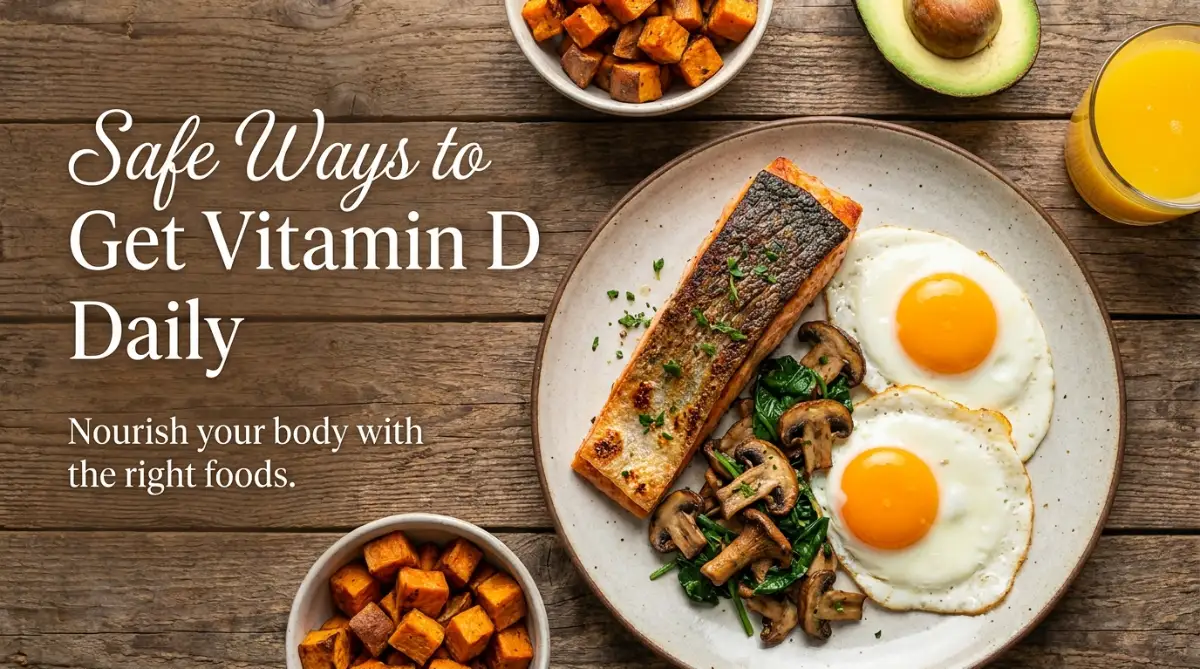
Fatty fish are the absolute champions here. Salmon, mackerel, and sardines are packed with this nutrient and also offer healthy omega-3 fats.
If you do not like fish, look for pasture-raised egg yolks. Chickens that roam outside in the sun produce eggs that are significantly richer in nutrients than factory-farmed ones.
Mushrooms are another fascinating option. Just like humans, mushrooms can produce this nutrient when exposed to UV light. Try leaving your store-bought mushrooms on the windowsill in direct sunlight for a little while before cooking them.
My own journey changed drastically when I stopped treating supplements like magic pills and started pairing them correctly. I used to swallow my vitamins first thing in the morning with just a glass of water, wondering why my blood tests never improved. Then my doctor explained that Vitamin D is fat-soluble, meaning I absolutely had to take it with a meal containing healthy fats, like avocado or olive oil, for my body to actually absorb it.
Smart Supplementation Strategies
Sometimes, food and sun are simply not enough. If you live far from the equator, work night shifts, or spend all day in an office, supplements are a safe and effective bridge.
Always check the label to ensure you are buying D3 (cholecalciferol) rather than D2. D3 is the exact form your body makes from sunlight, and studies show it raises your blood levels much more effectively.
Do not just guess your dosage, though. Taking too much can cause calcium to build up in your blood, leading to kidney issues. Always ask your doctor for a simple blood test to find out your baseline before starting high-dose pills.