

The Harsh Reality of Working Hard but Failing Hard
I remember staring at my textbook at three in the morning, my eyes burning and my brain feeling empty. I had spent eight straight hours locked in my room, highlighting every single page until my markers literally dried up. My final exam was just hours away, and I felt completely paralyzed by fear and exhaustion.
When the results came out later that week, I failed miserably despite putting in more hours than anyone else in my class. That was the exact moment I realized my hard work was actually working against me. I was doing everything my teachers and society told me to do, but my methods were quietly destroying my academic life.
You might be going through the exact same nightmare right now. You sit at your desk for hours, skipping meals and ignoring your friends, just to read the same chapter over and over again. Yet, when you look at the exam paper, your mind goes completely blank. It feels like someone just erased your memory overnight.
This endless cycle is destroying the mental peace of countless students around the world today. It makes you feel like you are simply not smart enough, which is a complete lie. The guilt of studying all day but remembering nothing causes massive anxiety and ruins your confidence.
We start sacrificing our sleep, our hobbies, and our family time just to catch up on lessons. But throwing more hours at a broken study routine is like trying to fill a bucket that has a giant hole at the bottom. You are bleeding energy, and your grades are still sinking.
The truth is, your brain is perfectly fine, but your daily study routines are completely broken.
The Hidden Trap of "Looking Busy" Instead of Actually Learning
Most students fall into the dangerous trap of confusing movement with actual progress. You might have ten books open on your desk, soft music playing in the background, and a fresh cup of coffee in your hand. It looks like the perfect study session on the outside.
However, looking busy does not mean your brain is actually absorbing any new information. Passive learning is the biggest silent killer of your final grades. You simply read sentences, nod along, and tell yourself that you understand the material.
But understanding a concept while reading it is entirely different from being able to remember it during a stressful exam. This is known as the illusion of competence. Let us break down how you can escape this trap and build a study routine that actually guarantees high grades.
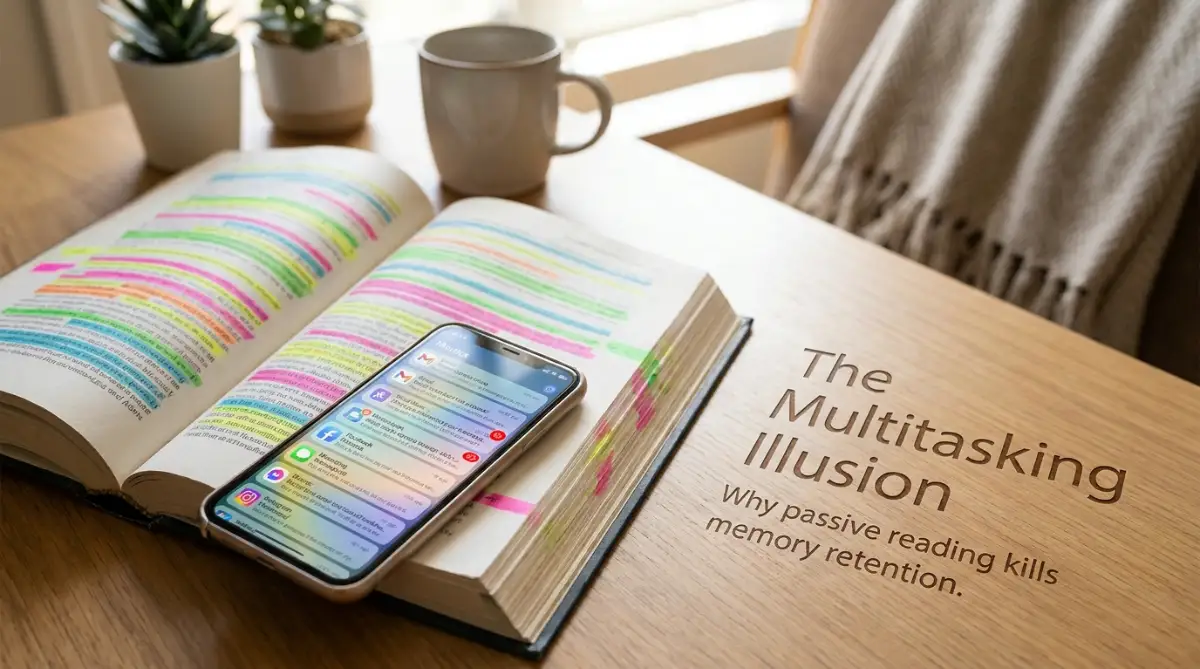
Stop Feeding the Highlighter Addiction
Think about how you normally read a brand new textbook chapter. You probably grab your favorite yellow or pink highlighter and start marking every sentence that seems important. Before you know it, the entire page is glowing with bright colors.
You feel incredibly productive because your book looks heavily studied. But science tells us a completely different story about how the human memory works. Highlighting requires zero actual brain power.
Your eyes are just scanning words while your hand moves across the paper. Your brain is not actively trying to connect those new facts to things you already know. You are basically treating your expensive educational textbook like a casual comic book.
To fix this, you must switch from passive reading to active recall. After reading a single page, close the book completely. Look away and try to explain what you just read out loud, as if you are teaching it to a ten-year-old child.
If you stumble, forget words, or feel confused, you do not actually know the material yet. Go back, check your blind spots, and try explaining it again. This simple method forces your brain to build strong memory pathways that will not fail you during an exam.
The Background Noise Disaster
Many of us love studying with a favorite television show playing quietly in the background or a podcast running on our phones. We proudly call it multitasking. We think we are training our brains to handle multiple streams of information at once.
I used to think listening to random videos on YouTube helped me focus, but my brain was actually splitting its attention constantly. My biggest mistake was treating my main study time like a background task while texting my friends. Once I finally turned off my phone completely and sat in silence, I got more done in two hours than I used to achieve in six hours.
Human brains are literally incapable of focusing on two complex tasks at the same time. When you try to read an important theory while listening to someone talk, your brain rapidly switches between the two activities. Every time your brain switches focus, you lose a massive amount of mental energy.
This switch-tasking penalty drains your focus battery incredibly fast. It is exactly like having twenty heavy apps open on your smartphone at once. Your phone gets hot, the battery dies quickly, and the app you actually want to use starts freezing.
Put your phone in another room when you need to read complicated subjects. If you absolutely need music to block out street noise, only listen to tracks without any lyrics. Video game soundtracks are actually great for this because they are designed to keep you engaged without distracting you from your main goal.
Escaping the Cramming and Sleep Deprivation Cycle
There is a huge myth in the student community that staying up all night before a test shows dedication. We drink endless amounts of energy drinks, hoping the caffeine will magically lock the words into our brains. We stare at screens until the sun comes up, walking into the exam hall like zombies.
This habit destroys your grades faster than anything else. Memory consolidation, which is the process of turning short-term facts into long-term knowledge, mostly happens while you sleep. If you skip your deep sleep phases, your brain throws away almost everything you learned that day.
Imagine trying to build a strong brick wall without using any cement. You can stack as many bricks as you want, but the moment a slight wind blows, the whole wall will collapse. Sleep is the cement that holds your academic knowledge together.
Instead of cramming for twelve hours straight, you need to space out your study sessions over a few days. This is known as spaced repetition, and it is a complete game changer for students. Reviewing a topic for just thirty minutes a day over four days is far superior to studying it for four hours in one night.
Recognizing the Difference Between True Learning and Fake Progress
To make things incredibly simple for you, let us look at the differences between bad habits and practical reality.
A cluttered environment is another silent saboteur of your daily focus. When your desk is covered in old wrappers, random papers, and tangled wires, your eyes are constantly distracted. Even if you think you are ignoring the mess, your subconscious mind is working overtime to process all that visual garbage.
Clear your desk completely before you open a single book. Leave only the exact items you need for the specific subject you are studying right now. If you are doing math, you only need your textbook, a notebook, a pencil, and a calculator.
Everything else must be placed inside a drawer or moved to another table. This physical clearing process sends a strong signal to your brain that it is time to do serious work. It builds a healthy boundary between relaxation time and learning time.
Before you ever sit down for another study session, you need to hear this eye-opening truth about how your brain handles distractions.
How to Overcome the Fear of Starting
Sometimes the worst study habit we have is simply avoiding the study session altogether. Procrastination is not actually a time management problem. Experts say it is strictly an emotional management problem.
You avoid opening your books because the thought of studying makes you feel stressed, bored, or afraid of failing. So, you scroll through social media instead, seeking a quick hit of cheap dopamine to feel happy for just a few seconds. The longer you put it off, the bigger the monster becomes in your mind.
The easiest way to break this wall of fear is to shrink the task down to a ridiculous size. Do not tell yourself that you need to study for three hours. That sounds heavy and terrifying.
Instead, tell yourself that you will just sit at your desk and read one single paragraph. That is it. Just one paragraph, and then you permit yourself to stop if you want to.
Almost every single time, once you read that first paragraph, the massive invisible wall of resistance shatters. You realize the book is not going to bite you. Starting is always the hardest part of the entire journey. Once the momentum kicks in, keeping the flow going becomes surprisingly easy and natural.
Elite Strategies to Lock Information into Your Long-Term Memory
Now that we have removed the toxic routines draining your energy, it is time to build something powerful. You need a system that actively locks facts into your brain so they never slip away during a stressful test. The goal is to study smarter, not just longer, so you can actually enjoy your weekends again.
One of the most effective methods you can start using today is called subject interleaving. Most students make the mistake of studying one single subject for six hours straight. They think blocking out massive chunks of time builds deep focus.
However, cognitive scientists have proven that this actually causes severe brain fatigue. A better approach is to switch subjects every hour or two. You can read more about how interleaving improves cognitive retention in recent psychological studies published by educational experts.
When you mix math, history, and science in a single afternoon, you force your brain to constantly adapt. This mental workout strengthens your memory muscles much faster than staring at the same topic all day. Think of it like training for a sport. A professional tennis player does not just practice hitting forehands all week; they mix up their shots to stay sharp.
Another brilliant tactic is treating your academic syllabus like a massive financial project. When you procrastinate, you are essentially building up academic debt. Just like mastering the art of paying down personal debt, you cannot pay off a whole semester of ignored chapters in one single night.
You must attack the biggest, most intimidating topics first while your energy is high in the morning. Breaking down a massive, scary textbook into tiny daily tasks is the real secret to staying calm. Sometimes, understanding a complex academic theory is exactly like