
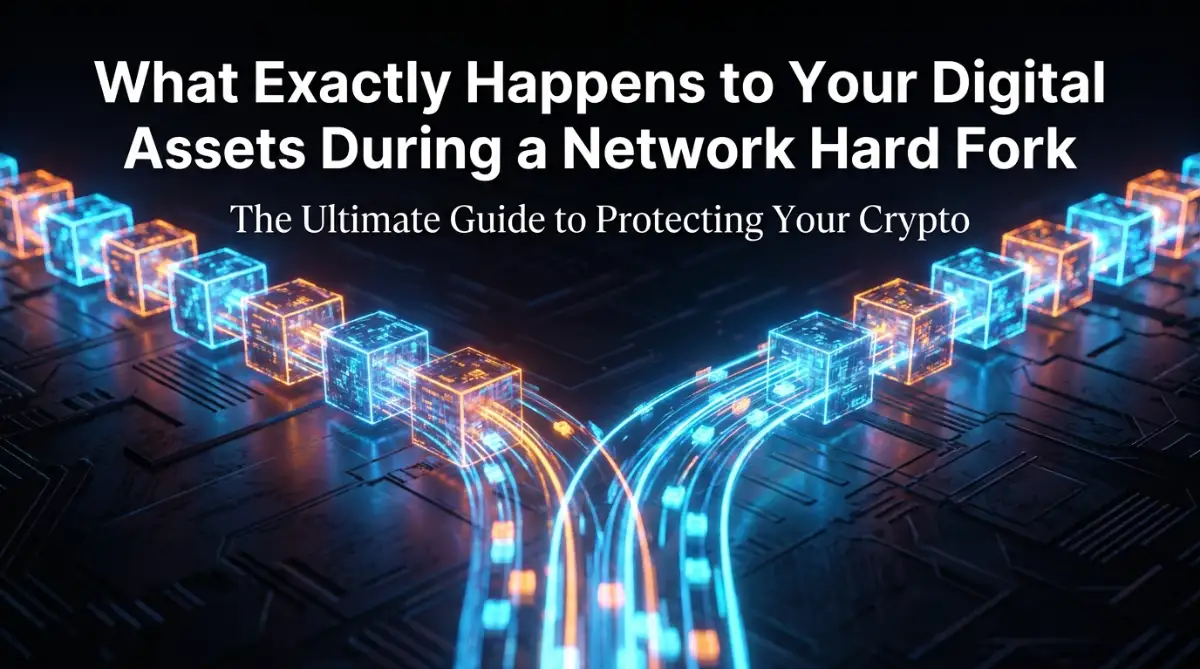
The Silent Panic of a Blockchain Split
I will never forget the absolute panic that washed over me when I experienced my first major blockchain split. My trusted portfolio app suddenly showed a strange new coin, and my original balance seemed completely frozen in time.
I honestly thought I had lost all my hard-earned digital assets in a single night due to a technical glitch. Staring at the blinking screen, my heart was racing because nobody had clearly explained what was actually happening behind the scenes.
We invest so much emotion, energy, and money into our portfolios, yet sudden network upgrades often feel like walking blindly into a storm. Regular people like you and me lose sleep over these highly technical changes, terrified that one wrong click will wipe out our entire savings.
The mental toll of waking up to a completely split network is deeply exhausting. You check social media and see forums exploding with confusing advice, complex jargon, and thousands of conflicting opinions.
This creates a heavy mix of the fear of missing out and the terrifying fear of losing everything you have built.
This overwhelming anxiety stems from a simple lack of clear, everyday explanations. The reality is that your digital assets are usually much safer than you think, provided you understand the basic mechanics at play.
The struggle is entirely real, but the confusion stops today. Let us break down exactly what goes on behind the scenes so you can navigate the next big network event with total confidence.
Understanding the Mechanics Behind the Split
To make sense of this, we need to completely strip away the confusing tech jargon. Imagine a busy train track that has been running smoothly in one straight line since the day it was built.
Every single train car represents a block of data, and the track itself is the blockchain. Everyone agrees on the rules of the track, the speed of the trains, and how the cargo is packed.
But one day, the engineers who manage the track have a major disagreement about how to improve the system. Half of the team wants to make the train cars bigger to carry more cargo, while the other half wants to keep things exactly the same.
Because they cannot agree, they decide to build a completely new track branching off from the main line. From that specific moment forward, there are now two separate train tracks heading in slightly different directions.
This is exactly what a network hard fork is in the digital space. The original community splits, and the single software history breaks off into two independent paths.
What Actually Happens to Your Holdings?
The most common question people ask is whether their original coins disappear during this event. The short answer is absolutely not.
When the track splits, the new system takes a massive, permanent photograph of every single account balance at that exact second. We call this process a snapshot.
If you held ten coins on the old network right before the snapshot, the new network copies that exact history. You will still have your original ten coins on the old track, but you will now also have ten brand new coins waiting for you on the new track.
This duplication often sounds like free money, and sometimes it can be highly profitable. However, managing these duplicated coins requires extreme caution and a clear strategy.
If you do not understand the rules of the new network, trying to claim or move these new coins can expose your original assets to severe security risks.
The Sneaky Danger of Replay Attacks
When dealing with a split network, the biggest threat to everyday investors is something called a replay attack. Because the two networks share the same history up until the split, they also use the same passwords and digital signatures.
Imagine you write a physical check to pay for a service on the old network. A bad actor could potentially take a copy of that same check and cash it on the new network without your permission.
This happens because the new system recognizes your signature as valid since it copied all your past data. If you try to send your new duplicated coins to a friend, you might accidentally send your valuable original coins at the same time.
Fortunately, most modern developers build special safety locks, known as replay protection, to prevent this from happening. But if a new split does not include this protection, moving your funds too early can lead to disastrous financial losses.
My Personal Pro Tip for Total Safety
I learned my lesson about network upgrades the hard way by rushing into action. My biggest mistake was logging in and trying to move my funds exactly on the day of the split to claim my new coins. I quickly realized that waiting just a few days for the dust to settle, letting the developers patch early bugs, is the best way to keep your funds completely secure.
Visualizing the Upgrade Process
Sometimes reading about technical concepts is not enough to truly grasp how they work. If you are a visual learner, seeing a real-time walkthrough of a chain split makes everything click instantly.
Where Are Your Coins Kept During the Split?
Your immediate safety heavily depends on exactly where you choose to store your digital assets before the event happens. There are generally two main places people keep their coins: on a centralized exchange or in a private, self-custody wallet.
If you leave your funds on a major centralized exchange, you are essentially trusting a big bank to handle the complicated technical work for you. The exchange will temporarily pause all deposits and withdrawals to protect their massive reserve of user funds.
Once they feel the new network is stable, they will update your dashboard to show your original coins alongside the new ones. The downside here is that you have absolutely zero control over the timeline.
Sometimes, an exchange might decide they simply do not support the new network at all. If they refuse to support the split, you will never see those duplicated coins in your account, and you will miss out entirely.
The Power of Private Storage
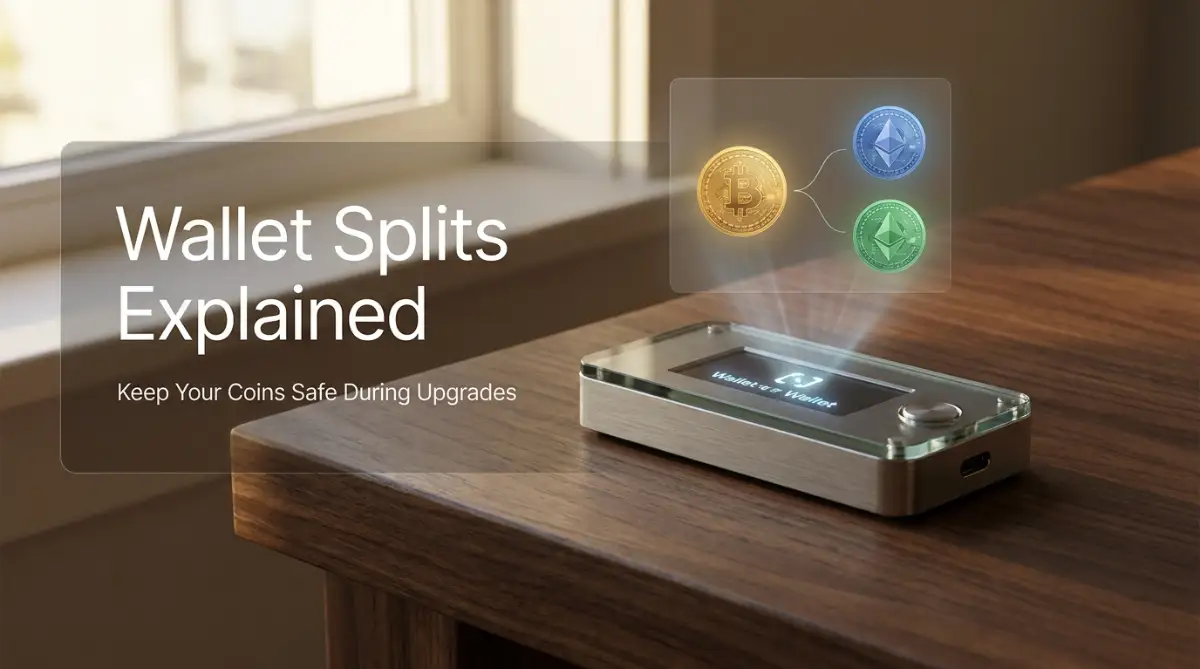
This is why having a private wallet, where you hold your own private keys, is heavily recommended by experienced investors. When you hold your own keys in a hardware wallet or a trusted software wallet, you are the true owner of your data.
The snapshot will record your private address, guaranteeing that the new coins belong exclusively to you. You do not have to wait for an exchange manager to approve your balance or grant you access.
However, this absolute freedom comes with a large amount of personal responsibility. You will need to manually connect your private wallet to the new network to view and interact with your duplicated assets.
If you skip reading the official safety instructions, you could easily fall victim to fake wallet apps designed to steal your private keys during the post-fork confusion.
Myth vs Reality: Breaking Down Common Misconceptions
There is an incredible amount of misinformation floating around the internet when a major upgrade is announced. Let us clear up a few of the most dangerous myths that often confuse regular investors.
Myth: A hard fork means the original coin is dead and useless.
Reality: The original coin continues running exactly as it always has. A fork simply creates a new alternative option, leaving the original network completely intact and functional.
Myth: You have to quickly buy more coins during the upgrade to get the duplication.
Reality: Your balances are recorded exactly at the moment of the snapshot block. Buying coins after that specific block number will not give you any duplicated assets on the new chain.
Myth: All new duplicated coins will eventually reach the same high price as the original.
Reality: The vast majority of new branched coins drop significantly in value within the first few weeks. Their value depends entirely on how many users and developers actually decide to support the new system.
How Smart Contracts and NFTs Behave
Most people only think about their standard currency coins during an upgrade, but what happens to complex assets like NFTs and smart contracts? This is where things get genuinely fascinating and slightly chaotic.
Because the entire history is copied, every NFT you own is duplicated in the new network. If you own a digital piece of art on the main track, a perfect clone of it will instantly appear on the new track.
But do not get too excited about suddenly doubling your net worth. The wider community almost always decides that only the NFTs on the original chain hold any real monetary or cultural value.
The duplicated NFTs are generally seen as worthless ghosts of the original. The same logic applies to decentralized finance contracts, lending platforms, and digital stablecoins.
A digital dollar on the main chain is backed by real money in a bank account somewhere in the real world. The copied digital dollar on the new chain is completely unbacked and usually trades for zero cents within hours.
This breakdown shows exactly how funds duplicate on the blockchain without any headache-inducing jargon.
Comparing Soft Changes vs Hard Changes
To truly protect your portfolio, you must understand the difference between the two main types of network upgrades. Not every update causes a massive split or duplicates your holdings.