
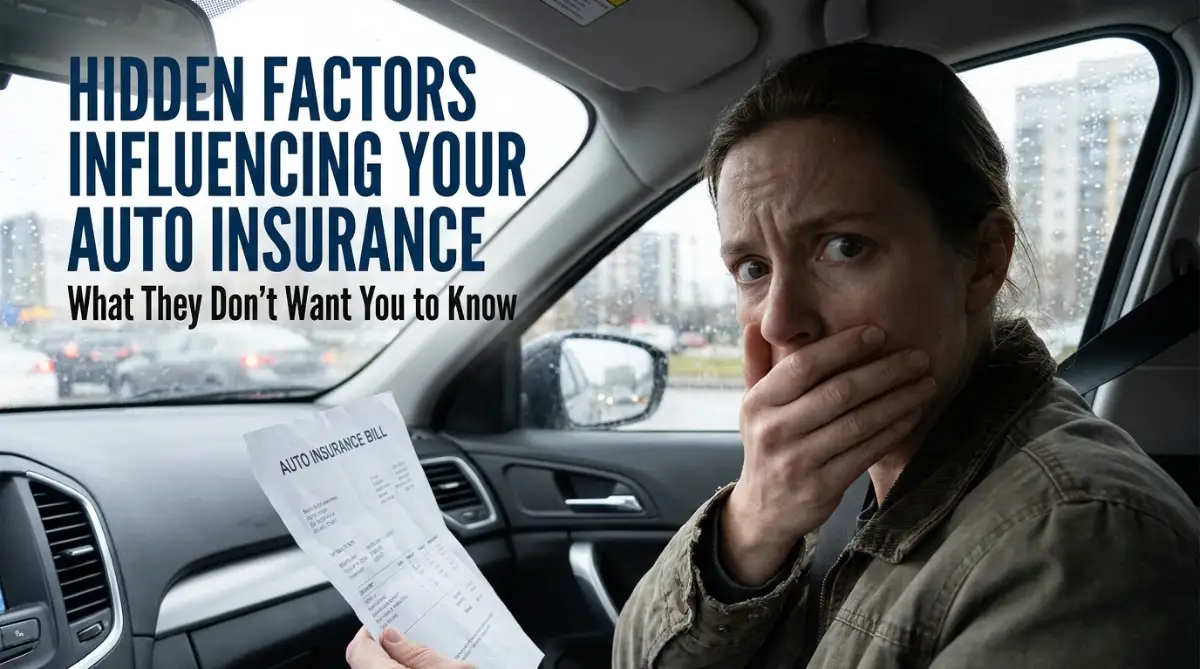
The Frustrating Reality of Rising Coverage Bills
I still remember the exact moment my heart dropped while opening my mail on a random Tuesday morning. I had been a safe driver for years, never had a single speeding ticket, and treated my old sedan like it was made of pure gold. Yet, staring right back at me was my new monthly auto insurance bill, and the price had randomly jumped by almost forty percent. I instantly felt a huge wave of panic and confusion wash over me. I actually called my agent right away, completely convinced there was a massive billing error on my account. My hands were literally shaking as I held the phone, waiting for someone to explain why I was being punished for being a responsible driver.
That day, I learned a very hard lesson about the secret machinery running behind the scenes of coverage providers. Everyday people are silently losing their hard-earned money to hidden pricing rules they know absolutely nothing about. You try so hard to balance your monthly budget, cutting out your favorite coffee runs and skipping family dinners out, just to keep up with your bills. Then, out of nowhere, an unexpected premium hike throws your entire financial plan completely off track.
This is the exact stressful reality for thousands of safe drivers right now. The constant anxiety of not knowing what your next bill will look like takes a serious toll on your mental peace. You feel completely powerless because you think your driving record is the only thing that matters.
Unfortunately, safe driving is just one tiny piece of the massive puzzle. Providers look at highly personal, completely unexpected details about your daily life to figure out exactly how much you should pay. These invisible elements slowly drain your bank account month after month.
People are naturally frustrated and tired of playing a game where they do not even know the rules. It feels incredibly unfair when you do everything right on the road but still get treated like a high-risk liability. You deserve to keep your own money instead of blindly handing it over to massive corporations.
Unmasking the Invisible Rules of Coverage Pricing
Once you finally understand the secret math behind your monthly bill, everything starts to make sense. It is not just about how you drive; it is about who you are, where you go, and how you live. Companies use highly advanced algorithms to predict how likely you are to file a claim in the future.
To beat them at their own game, you simply need to learn what they are looking at. We are going to expose the biggest hidden elements affecting your bill right now. By tweaking just a few of these everyday things, you can take control back and stop overpaying.
The Financial Shadow Over Your Vehicle
Most people think their financial habits have absolutely nothing to do with their driving skills. However, your credit history is actually one of the heaviest weights pulling down your coverage budget. Providers in most states use a secret formula called an "insurance-based credit score" to judge you.
They strongly believe that people with lower financial scores are statistically more likely to file claims. If you have missed a few credit card payments or carry high debt, your auto premium will quietly go up. You might be the safest driver on the highway, but a poor financial rating makes you look like a massive risk on paper.
Myth vs Reality: The Financial Connection
-
The Common Myth: My provider only checks my driving history when setting my rate.
-
The Actual Reality: Unless your state bans it, your financial rating impacts your rate just as much as a minor car accident would.
To fix this, you have to start treating your credit report like your driving record. Pay your bills on time, keep your card balances low, and check your reports regularly for silly errors. As your numbers slowly improve, you can actually call your agent and ask them to recalculate your risk profile.
The Unseen Penalty of Your Home Address
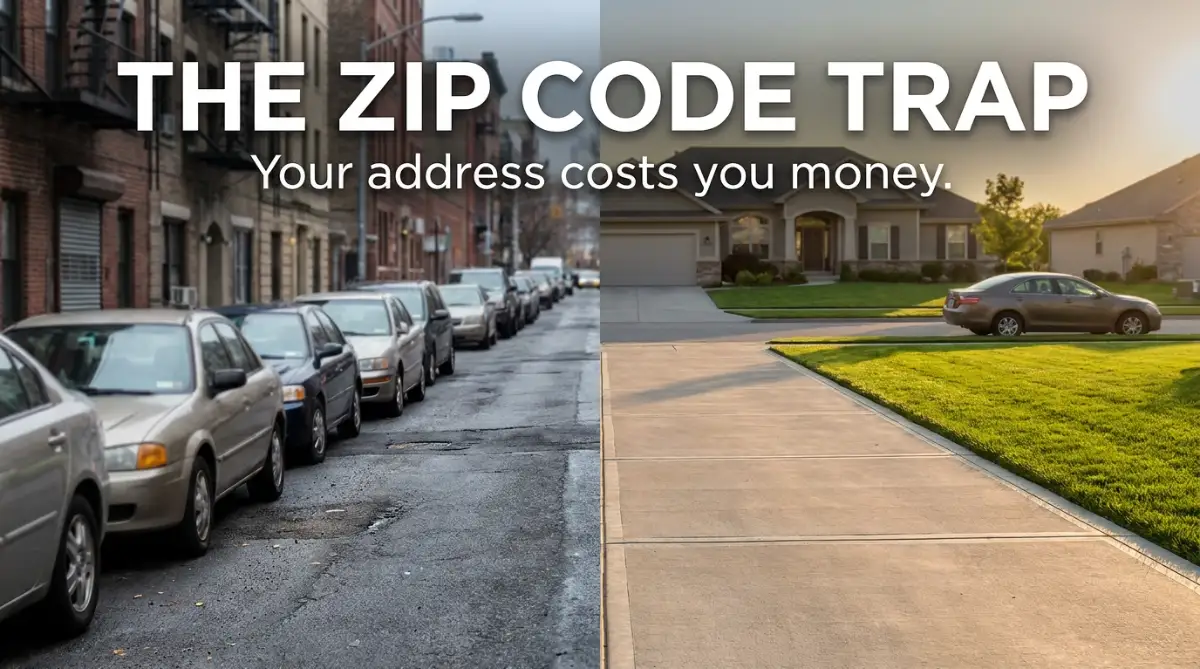
Your specific neighborhood tells a massive story to your coverage provider. Two drivers with the same car and driving history can pay wildly different amounts just by living one block apart. Your ZIP code is essentially a giant price tag attached to your vehicle.
If you live in a highly populated urban area, your rates will naturally be much higher. Companies look at local crime rates, the number of busy intersections, and even the history of severe weather in your exact town. If your neighbors get into a lot of fender benders, you end up paying for their bad driving.
Even the exact spot where you park your car at night makes a huge difference. Parking in a secure, locked garage lowers your risk of theft and weather damage compared to parking on a dark street. If you recently moved to a new apartment or bought a house, that simple address change might be the hidden reason your bill went up.
Always check coverage estimates for different neighborhoods before you decide to move. If you finally cleaned out your garage and started parking inside, make sure to update your agent right away. You could instantly unlock a hidden discount just by moving your car a few feet indoors.
How Your Daily Commute Drains Your Wallet
The number of miles you drive every single day is a major puzzle piece in your overall price. When you first signed up for your policy, they likely asked for an estimate of your annual mileage. Most people just guess a random number, completely unaware of how heavily it impacts their monthly payments.
If you have a long daily drive to work, you are spending more time on busy highways during rush hour. More time on the road naturally equals a higher chance of getting into an accident. Providers charge you a heavy premium for simply spending more time behind the wheel.
However, life situations constantly change. Maybe you recently started working from home, or you found a new job much closer to your house. If you are driving significantly less than you were last time you updated your policy, you are practically throwing money away.
I actually fell into this exact trap a few years ago.
My daily commute dropped from an hour to just ten minutes after a job switch, but I completely forgot to tell my provider. I paid the higher "long-commute" rate for almost nine straight months before I finally realized my mistake. Always update your estimated mileage immediately when your daily routine changes; it is the easiest phone call you will ever make to save money.
The Secret Judgment of Your Job Title
Believe it or not, what you do for a living can change the price of your coverage. Providers love to analyze massive amounts of data to find weird patterns in human behavior. They have decided that certain professions are simply less likely to get into car accidents.
For example, teachers, nurses, and scientists often get cheaper rates because data shows they are naturally cautious and detail-oriented. On the other hand, business executives, salespeople, and reporters might face higher rates. Companies assume these jobs are highly stressful, involve rushing from place to place, and require constant phone use while driving.
Here is a quick look at how companies generally view different career paths:
While you should never lie about your job, you can be smart about how you describe it. If you are an "Account Executive," you might just want to list your job as "Office Worker" or "Administrator" if it accurately fits your duties. A simple change in terminology on your application can trigger a surprisingly nice discount.
The Hidden Impact of Your Relationship Status
Getting married changes almost everything in your life, including how much you pay to drive. Single drivers almost always pay more for their monthly coverage than married couples do. The companies view married people as more stable, cautious, and financially responsible.
When you tie the knot, statistics show you are more likely to stay home at night instead of driving around late. You are also likely sharing the driving duties, which splits the overall risk between two people. If you recently got married and forgot to update your personal profile, you are definitely missing out on a solid rate drop.
Even your education level quietly plays a part in this background calculation. Some providers offer heavy discounts for drivers who hold a bachelor's or master's degree. They use the same logic: people who spend years in college are often viewed as more responsible and risk-averse.
The Danger of Small Gaps in Your Coverage
One of the most dangerous hidden factors is something you might accidentally do when switching providers or selling a car. If you ever let your coverage expire, even for a single day, you become a massive red flag. This is known as a lapse in coverage, and companies hate it.
They assume that if you drove without a safety net for a few days, you are highly irresponsible. Even if your car was sitting completely broken in your driveway during that time, the computer system automatically labels you as a high-risk customer. When you finally go to buy a new policy, you will face an aggressive price penalty.
If you are planning to switch companies to get a better deal, never cancel your old policy until the new one is fully active. Let the two policies overlap for a day or two just to be completely safe. Paying for one extra day of double coverage is incredibly cheap compared to the heavy penalty of a permanent lapse on your record.
The Sneaky Problem with High-Tech Car Parts
You might think buying a super safe, modern car with automatic braking and lane assist would lower your bill. While you do get safety discounts, the overall price might surprisingly still go up. This happens because the physical parts on modern cars are ridiculously expensive to replace.
If you lightly bump a pole in an older car, a plastic bumper replacement is fairly cheap. If you do the same thing in a brand-new car, you might destroy sensitive hidden sensors and backup cameras. A tiny fender bender suddenly becomes a massive repair bill for the company.
When shopping for a different vehicle, always look up the specific trim level you want to buy. A standard base model will almost always be cheaper to insure than the luxury version loaded with delicate electronics. You have to balance the joy of having cool new gadgets with the reality of higher monthly replacement costs.
Taking Charge of Your Monthly Payments
Understanding these hidden rules gives you a massive advantage over the massive providers. You are no longer just a passive customer accepting whatever random number they print on your statement. You have the actual power to review your life changes and demand a fair adjustment.
Every single time your lease renews, or you change jobs, or you move to a new street, you need to re-evaluate your profile. Do not let these invisible elements quietly drain your family budget. Pick up the phone, ask smart questions, and force your provider to give you the honest pricing you truly deserve.
Next-Level Strategies to Outsmart the System
Now that we have uncovered the sneaky rules running in the background, it is time to flip the script entirely. You do not have to just sit back and accept whatever inflated number your provider throws at you every six months. There are several powerful, advanced strategies you can use right now to force your premium down to a much fairer price.
These are the exact methods industry insiders use for their own families to keep their driving expenses unbelievably low. Think of these tactics as your secret weapon to bypass the standard pricing algorithms. By actively managing your profile, you take away their excuses to overcharge you.
The Hidden Power of Telematics Tracking
Most major providers now offer a tiny plug-in device or a smartphone app that tracks exactly how you drive. This technology is known as a telematics program, and it is entirely optional for customers. The company uses GPS and sensors to monitor your hard braking, quick accelerations, and phone usage behind the wheel.
If you are genuinely a safe, cautious driver, signing up for this program can trigger massive long-term savings. The company stops guessing about your habits and finally sees raw data proving you are a low-risk customer. Many people see their bills drop by twenty percent just for letting the app run silently in the background.
However, there is a very specific catch you need to know about before signing up. These apps heavily penalize people who regularly drive late at night or during the early morning hours. Independent National Highway Traffic Safety Administration (NHTSA) telematics studies show that nighttime driving carries the highest risk of severe accidents.
If your job requires you to work the graveyard shift, this tracking app will actually hurt your profile and increase your bill. You have to honestly evaluate your daily routine before agreeing to share your personal driving data. If you only commute during daylight hours and never speed, this is the easiest money you will ever save.
Leveraging Your Secret Memberships
You probably belong to a few different organizations or clubs without even realizing their financial value. Insurance companies love to partner with massive groups to offer exclusive, unadvertised group rates. These secret discounts are rarely mentioned by standard agents unless you specifically ask about them over the phone.
Are you a member of a university alumni association, a local credit union, or a professional trade group? Even warehouse club memberships or certain wholesale retail subscriptions can unlock a permanent five to ten percent discount. Providers offer these group rates because joining an organization usually signals stability and responsibility.
Take five minutes tonight to write down every single group, union, or association you belong to. Tomorrow morning, call your agent and slowly read that list to them, asking if any of them qualify for an affiliation drop. You might be completely shocked to find out your college degree is suddenly paying you back in monthly savings.
Mastering the Art of the Retention Call
One of the biggest secrets in this entire industry is the sheer power of the cancellation department. When you call standard customer service to complain about a high bill, they usually have zero authority to change your price. The regular representatives are literally reading from a script and cannot bend the rules for you.
To actually get results, you need to firmly tell the first person you speak with that you want to cancel your policy. This magical phrase instantly transfers you to the customer retention department. The agents in this specific department have special override codes and hidden loyalty discounts they can apply to your account immediately.
When you get on the line with retention, stay extremely polite but firmly state that you found a cheaper rate elsewhere. Have a printed quote from a competitor sitting right in front of you so you can confidently quote a lower price. Nine times out of ten, they will suddenly "discover" a new promotional rate just to stop you from leaving.