
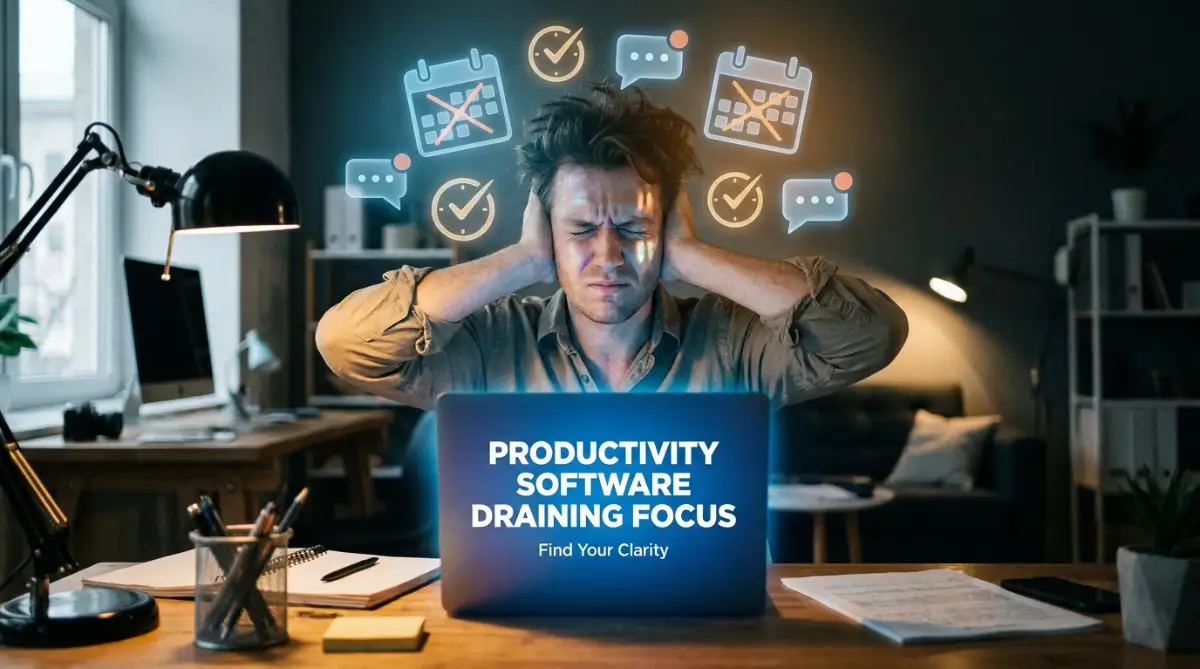
The Hidden Trap of Trying to Organize Everything
I used to think downloading another app would magically fix my messy life. My phone was packed with daily timers, habit trackers, and endless to-do lists that promised to make me better. I spent hours organizing my tasks by color, adding specific tags, and setting unrealistic due dates.
But at the end of the day, my actual work was never finished. I felt completely exhausted, yet I had accomplished absolutely nothing of real value. The very tools that were supposed to save my time were secretly stealing my attention.
Have you ever felt that heavy weight in your chest when you open your laptop in the morning? You see dozens of unread notifications waiting for you across three different platforms.
Before you even drink your first cup of coffee, your brain is already tired. You instantly jump from one chat box to a project board, trying to clear the red dots.
This is what modern digital fatigue feels like. We are constantly busy organizing our work instead of actually doing the work. The mental peace we desperately crave is destroyed by the constant buzzing and pinging of our devices.
Instead of feeling in control, we feel like we are constantly falling behind schedule. We go to sleep feeling guilty because those little digital checkboxes remain empty.
Why Your Brain Hates Context Switching
You might think you are a great multitasker. Most of us believe we can easily jump between a messaging app, a writing tool, and an email inbox without any problems.
But science tells a completely different story about how human attention actually works. Every time you switch from one software to another, your brain pays a heavy tax.
Psychologists call this "attention residue." When you leave a task board to check a quick message, a small part of your brain is still stuck on that board.
You never give your full, undivided attention to the new task. This constant jumping around drains your mental energy faster than any physical labor.
Think about your daily routine right now. How many tabs do you have open at this exact moment?
If you are like most people, you have at least five different work apps fighting for your attention. Your brain is forced to process all that background noise, leaving you feeling drained by noon.
The Illusion of Fake Work
There is a massive difference between being busy and being productive. Sadly, our favorite software makes it very hard to tell the difference.
Moving a digital card from "Doing" to "Done" gives your brain a tiny hit of dopamine. It feels amazing in the moment, making you think you are making progress.
But spending forty-five minutes color-coding your weekly calendar is not real work. It is simply a very clever way to procrastinate while feeling productive.
We hide behind our beautiful software dashboards because doing deep, meaningful work is hard. Staring at a blank page or solving a complex problem takes real effort.
It is much easier to just reorganize a list or reply to a quick comment. We have turned software management into a full-time job, completely forgetting our actual goals.
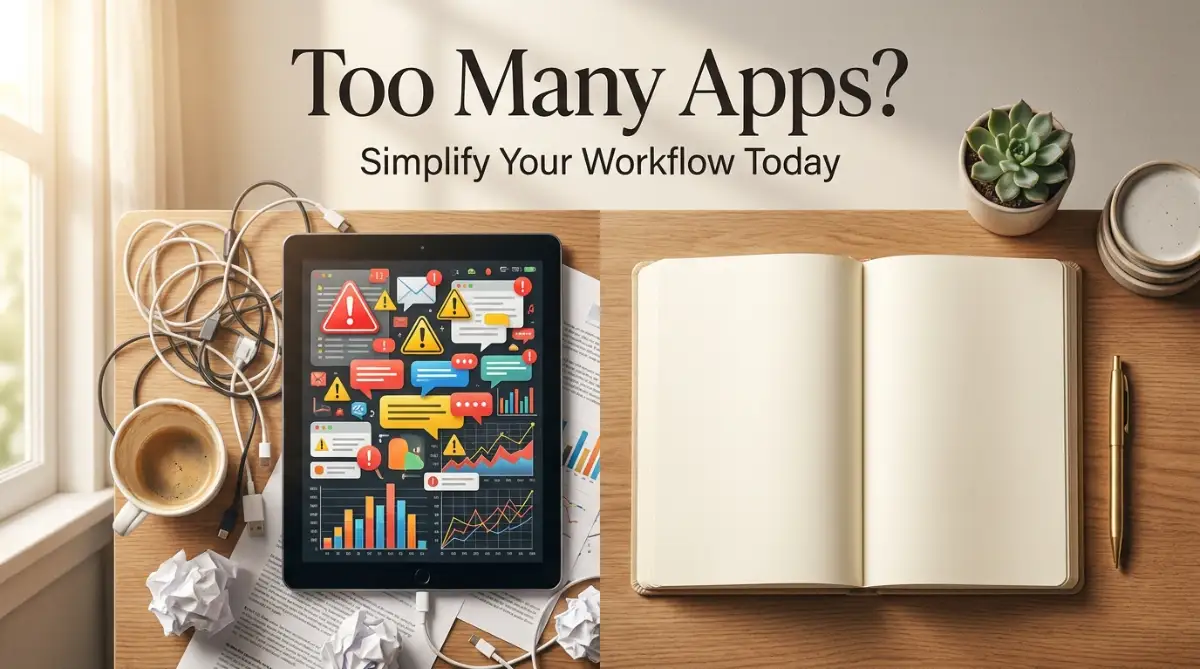
Myth vs Reality: The Productivity Trap
How to Reclaim Your Mind From App Overload
Now that we know the problem, we need to take immediate action. You do not have to throw your computer out the window to find peace.
You just need to build a system that respects human psychology and your natural limits. Let us look at some highly practical ways to clean up your digital life today.
The Brutal Digital Purge
The first thing you must do is stop treating your phone like a digital storage unit. You need to look at every single app you use for work and ask a hard question.
Does this tool actually save me time, or does it require me to maintain it? If an app takes more time to update than the actual task takes to complete, delete it.
You should aim to run your entire daily life on a maximum of three core tools. You need one place for communication, one for deep work, and one for simple notes.
Anything beyond that is just adding unnecessary noise to your day. Be completely ruthless when deleting accounts you have not used in the past month.
I remember when I deleted three major task apps and moved everything to a simple physical notebook for a whole week. I realized that my brain did not need complex graphs; it just needed clear priorities. That single shift saved me hours of pointless screen time.
Establishing Hard Notification Boundaries
Your attention is your most valuable asset, yet you give it away for free to any app that asks. You need to treat your focus like a highly secure bank vault.
Go into your settings right now and turn off every single push notification on your devices. Yes, even your work emails and team chat apps.
If something is truly an emergency, people will find a way to call you on the phone. Everything else can wait until you are ready to look at it.
Set specific times during the day to check your messages. Maybe you check once at 10 AM, and once again at 3 PM.
During the rest of the day, those apps stay completely closed. This one simple change will instantly give you back hours of deep, uninterrupted thinking time.
The Power of the "One Screen" Rule
When you sit down to do important work, your environment dictates your success. Having two monitors filled with floating windows is a recipe for disaster.
Adopt the "One Screen, One Task" rule for your most demanding projects. If you are writing a report, make that document fill your entire screen.
Close your browser tabs, hide your dock, and remove all visual clutter. When your eyes have nothing else to look at, your mind has no choice but to focus.
This sounds simple, but it is incredibly powerful. It forces you to deal with the difficulty of the task instead of running away to a different app.
The Analog Bridge Method
Sometimes the best way to fix a software problem is to stop using software altogether. We rely so heavily on digital tools that we forget the magic of pen and paper.
When your brain feels foggy from staring at screens, step away from the desk entirely. Grab a blank notebook and physically write down your top three priorities for the day.
There is a strong connection between physical handwriting and memory retention. Writing things down slows your brain down, forcing you to think about what really matters.
You cannot open a new tab on a piece of paper. It offers zero distractions and zero pop-ups.
Use your digital tools for long-term storage and team sharing only. Use physical paper for your daily, active thinking process.
Intentional Time Blocking Over To-Do Lists
A standard list of tasks is actually very bad for your mental health. It tells you what needs to be done, but it does not tell you when to do it.
This creates a constant feeling of anxiety because the list never seems to end. Instead of listing tasks, start scheduling them directly into your calendar.
Give every important task a specific start and end time. If you need to write a proposal, block out two hours on Tuesday morning just for that.
When that time arrives,