Waking Up to a Financial Nightmare: My Story of Sudden Silence
I still remember the Tuesday morning my world felt like it stopped spinning. I walked into the office thinking about the new project, but I left thirty minutes later with a cardboard box and a heavy heart. The "we're letting you go" talk is something you never truly prepare for, even if you think you are ready.
As I sat in my car, the silence was deafening. My very first thought wasn't about my next career move or updating my resume. It was about the mortgage payment due in two weeks and the car loan that felt like a mountain on my chest.
I felt a cold shiver of fear that I know many of you are feeling right now. It is that sinking feeling in your stomach when you realize the steady paycheck is gone, but the bills are still coming. The bank doesn't care that the company downsized; they just want their money.
Managing debt while you are unemployed is one of the most stressful things a human being can go through. It steals your sleep and makes every phone call from an unknown number feel like a threat. You start looking at your bank balance every hour, as if staring at it will make the numbers grow.
The mental weight is often worse than the financial weight. You feel like you have failed your family, and the walls start closing in. I lived through that fog for weeks before I realized that sitting in fear wasn't going to save my credit score.
I had to learn how to fight back and build a safety net while the ground was still shaking under me. This isn't just about math; it is about survival and keeping your dignity intact. Let's talk about how we can navigate this mess together, one step at a time.
Facing the Reality: The First 48 Hours of Financial Survival
When the income stops, your brain usually goes into "flight or fight" mode. You might want to ignore the bank or hide the bills under a pile of mail. Please, do not do that. The worst thing you can do is go silent.
I made the mistake of waiting until my account was nearly empty before I took action. By then, the stress was so high I couldn't think straight. You need a clear plan the moment you get that final paycheck or severance notice.
The first step is what I call "Financial Triage." Just like in a hospital, you have to decide who gets treated first and who can wait. Not all debts are created equal. Your house and your car are usually the top priorities because you need a place to live and a way to get to future interviews.
Start by listing every single loan you have. Write down the balance, the interest rate, and the minimum monthly payment. Seeing it all on one piece of paper is scary, but it is the only way to gain control. You cannot fight a monster you refuse to look at.
Once you have your list, it is time to look at your "Burn Rate." How much money is leaving your house every month? During my job loss, I was shocked to see how much I was spending on small things that didn't matter. I had to cut the fat immediately to save every penny for those loan payments.
The Power of Proactive Communication with Lenders
Most people think banks are cold machines that want to take your home. While they are businesses, they actually hate "bad debt." It costs them more money to go through a foreclosure or a repossession than it does to help you.
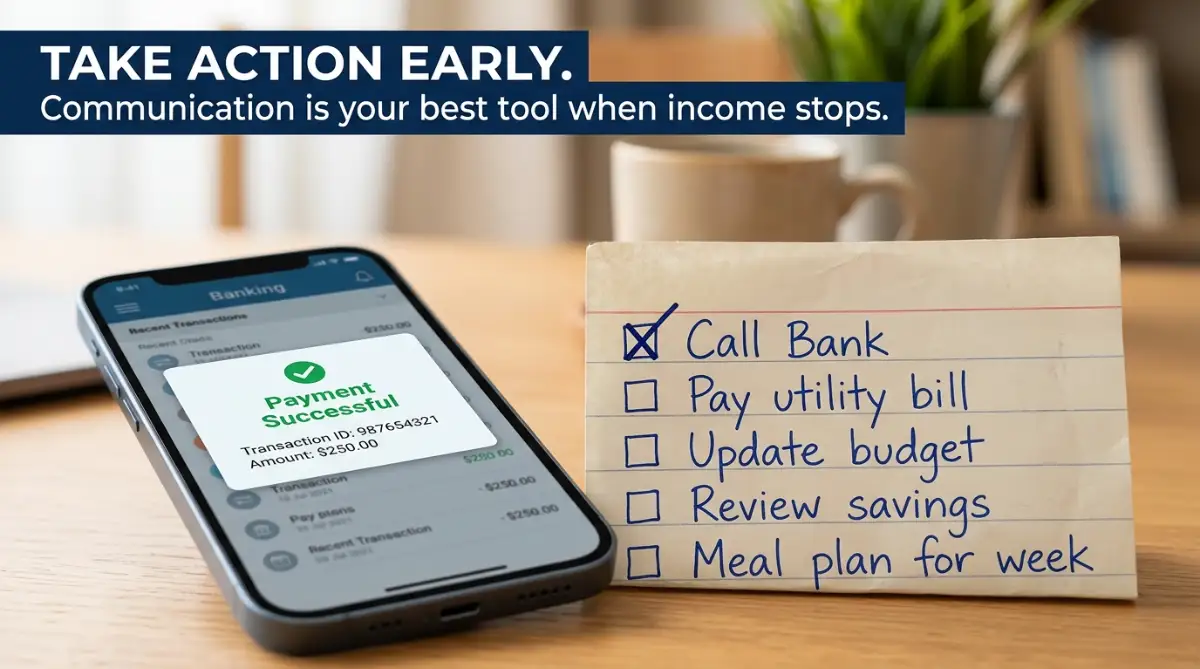
I found out that if you call them before you miss a payment, they are much more likely to help. I remember my hands shaking as I dialed my mortgage lender. I told them honestly, "I lost my job, and I want to make sure I don't fall behind. What can we do?"
To my surprise, the person on the line didn't judge me. They told me about a "hardship program" I didn't even know existed. They were able to lower my payments for three months while I got back on my feet. This gave me the breathing room I needed to breathe again.
Always ask for the "Hardship Department" or "Loss Mitigation." The regular customer service agents might not have the power to change your terms. You need to speak to the people who are trained to handle crises.
Be prepared to prove your situation. They might ask for your termination letter or proof of unemployment filings. Keep these documents organized in a folder. Being professional and organized shows them that you are serious about paying them back eventually.

Understanding Loan Forbearance and Deferment
These two words can be your best friends during a job loss. Deferment allows you to stop making payments for a set period. In some cases, like with federal student loans, the interest might not even grow during this time.
Forbearance is similar, but usually, the interest keeps adding up. This means your loan balance will be bigger when you start paying again. However, in a crisis, keeping the cash in your pocket for food and rent is more important than a slightly higher balance later.
I once thought that using these programs would destroy my credit. The truth is, a formal agreement with your bank is much better for your credit than simply not paying. If they agree to a deferment, it is reported to the credit bureaus as "paid as agreed" or "current."
This is how you protect your future. If your credit score stays high, it will be much easier to get a house or a car once you have a new job. Don't let a temporary job loss cause permanent damage to your financial reputation.
Strategic Spending: What to Pay and What to Delay
When money is tight, you have to be a bit of a rebel with your budget. I had to learn that some "important" bills are actually optional in a crisis. For example, your credit card companies would love to have their minimum payment, but they are "unsecured" debt.
This means they can't take your house or car if you miss a payment. Yes, it might hurt your credit score temporarily, but it is better than being homeless. I learned to prioritize "Secured Debts" first. These are loans backed by an asset.
Think about your lifestyle too. Do you have multiple streaming services? A gym membership you barely use? Cancel them all. It felt small, but saving $100 a month on subscriptions gave me a few extra days of groceries.
I also looked into my local community resources. Many utility companies have "Low Income Assistance" programs. By getting my electric bill reduced, I could put that extra $50 toward my car loan. Every little bit counts when you are in the middle of a storm.
My Personal Realization: The "Secret" Emergency Fund
During my struggle, I realized I had been looking at my "Emergency Fund" all wrong. I thought it had to be a huge pile of cash. In reality, an emergency fund is also the "liquidity" you have in other places.
Pro Tip: I found that I had a small amount of money sitting in an old retirement account from a previous job. While I didn't want to touch my future savings, using a small portion of it to keep my mortgage current saved me from a total collapse. I learned that it is okay to use your resources to survive a literal emergency—just be mindful of the taxes.
This realization changed my perspective. I stopped seeing myself as "broke" and started seeing myself as "temporarily illiquid." It helped my mental health stay strong enough to keep applying for jobs every single day.
Navigating Federal and Private Student Loans
If you have student loans, the rules are different depending on the type. Federal loans are much more flexible. You can often switch to an "Income-Driven Repayment" (IDR) plan. If your income is zero, your monthly payment could literally be $0.
Private student loans are tougher. They don't have the same government protections. However, many private lenders now offer "unemployment protection" or temporary interest-only payment plans. You have to ask for them specifically.
I remember helping a friend who was terrified of her private student loans. We sat down and called the lender together. It took an hour on hold, but they finally agreed to a two-month break. That hour of waiting saved her from a default that would have haunted her for years.
The key is to never assume the answer is "no" until you ask. Lenders are changing their policies all the time, especially during economic shifts. Stay informed and stay persistent. Your persistence is the only thing the bank will see as a sign of your commitment.
Why You Should Avoid Payday Loans at All Costs
When you are desperate, those "Quick Cash" signs look very tempting. Please, listen to me: stay away from them. Payday loans are like putting a tiny band-aid on a massive wound while the doctor is trying to charge you 400% interest.
I saw a neighbor fall into this trap. He took a $500 loan to pay his car note. Within two months, he owed over $1,200 because of the interest and fees. It is a cycle that is almost impossible to break once you are in it.
Instead of payday loans, look for "Credit Union" hardship loans. Many local credit unions offer small, low-interest loans specifically for members who have lost their jobs. They are much more human-centric than the big national banks or predatory lenders.
If you are truly stuck, look at selling items you no longer need. I sold an old camera and some furniture on a weekend. It wasn't a lot, but it was "clean" money that didn't come with a high interest rate. It kept me away from the payday loan offices.
Building Your "Resume" for the Bank
When you talk to your lenders, treat it like a job interview. You want to show them that you are a "good bet." Tell them about the interviews you have lined up. Mention that you are actively seeking employment and that this is a temporary setback.
I found that when I sounded confident and had a plan, the bank representatives were much more willing to work with me. They want to know that if they help you now, you will be back to making full payments in a few months.
Keep a log of every person you speak to at the bank. Write down their name, the date, and what they promised. This "paper trail" is vital. If a bank suddenly tries to charge you a late fee after they promised to waive it, you have the proof to get it reversed.
Being your own advocate is a full-time job during unemployment. It is exhausting, but it is the only way to ensure your safety net holds strong. You are the CEO of your household, and right now, your job is "Debt Management and Recovery."
If you are feeling overwhelmed, this video breaks down exactly what to say when you call your bank so you don't feel nervous.
Using Unemployment Benefits Wisely
When the unemployment checks finally start arriving, it feels like a relief. But it is usually much less than your old salary. It is tempting to spend it all on the "loudest" bills—the ones where people are calling you the most.
I had to learn to sit down every Monday and map out exactly where every dollar of that check was going. I used a simple spreadsheet. If I had $400 for the week, I knew $200 had to be set aside for the rent, $100 for the car, and $100 for food and gas.
It felt like I was back in college, counting every nickel. But that discipline is what kept me from falling into the abyss. It also gave me a sense of accomplishment. Even if I didn't have a job yet, I was successfully "managing" my life.
That sense of control is the best medicine for the depression that often comes with job loss. You are not a victim of your circumstances; you are the manager of your recovery. Every payment you make, no matter how small, is a victory.
The Role of Credit Counseling Agencies
If you are totally lost and the numbers just don't add up, you don't have to do it alone. There are non-profit credit counseling agencies that can help. They can sometimes negotiate lower interest rates on your behalf across all your debts.
I reached out to one just to get a second opinion on my plan. They helped me see that I was being too hard on myself. They also pointed out a few state-level programs that offered assistance for people in my specific industry.
Be careful to choose a non-profit agency. Some companies claim to help but charge huge fees that just make your problem worse. Look for agencies certified by the National Foundation for Credit Counseling (NFCC).
Having an expert in your corner makes the "mountain" of debt look a little more like a hill. They can give you the logical perspective that your emotions are currently hiding from you. Sometimes, just knowing there is a plan is enough to help you sleep through the night.
Mastering the Art of Financial Defense and Debt Recovery
Now that we have talked about the first steps, we need to look at the bigger picture. Managing a loan when you have no income is like playing a high-stakes game of chess. You have to think three moves ahead to keep your king—your home and your credit—safe on the board.
One of the smartest things I did during my job hunt was looking at my high-interest debt differently. I had a credit card with a massive interest rate that was eating my soul every month. I realized that if I could move that debt to a lower-interest place, I would save hundreds of dollars in interest alone.
You might think that getting a "Balance Transfer" card is impossible when you are out of work. However, if you apply while your credit score is still high, you might get lucky. Even moving half of your debt to a 0% interest card for 12 months can be a total game-changer for your monthly budget. This is part of understanding interest rates so you can protect your wallet from getting drained.
Another advanced trick is to look for "Bridge Income." This is not your dream job; it is just a way to keep the lights on and the lenders happy. I spent a few weeks doing simple online tasks and selling some old electronics.
It wasn't much, but that extra $200 a week meant I didn't have to touch my savings for groceries. When you show your bank that you are making "partial payments" from side work, they see you as someone who is trying. Lenders respect effort more than silence every single time.
You also need to understand the fine print of your existing loans. Sometimes there are hidden clauses that can help or hurt you during a crisis. I once found a small insurance policy attached to my car loan that covered my payments for three months if I got laid off.
I didn't even know I was paying for it! This is why it is so important that you read your loan contract carefully to avoid missing out on benefits you already paid for. Knowing these details can save you from a lot of unnecessary panic.
Thinking Long-Term While Living Day-to-Day
When you are in the middle of a crisis, it is hard to think about next year. But your financial health depends on it. You need to keep a very close eye on your credit report during this time.
Use free tools to check your score every single week. If you see a "missed payment" that you actually settled with the bank, call them immediately to fix it. Errors happen more often than you think, especially when you are using hardship programs.
If you have multiple small debts, you might be tempted by debt consolidation companies. They promise to make everything into one easy payment. But you have to be careful because some of these companies are more interested in their fees than your freedom.
Before you sign anything, make sure you know the truth about debt consolidation and whether it actually helps your wallet or puts it at more risk. Sometimes, just managing the loans yourself is safer and cheaper in the long run.
I also suggest reaching out to professional non-profit organizations. The NatiAonal Foundation for Credit Counseling is a great place to start. They can offer advice that is tailored to your specific situation without trying to sell you an expensive product.
Maintaining your mental health is also an "advanced" tip. If you are too stressed to think, you will make bad money choices. Take an hour every day to step away from the spreadsheets and the job boards. Walk in a park or read a book that has nothing to do with money. Your brain needs to rest so it can stay sharp for the next interview.
The Dangerous Traps That Can Ruin Your Recovery
When we are scared, we often make choices that feel good in the moment but hurt us later. The biggest mistake I see people make is "The Silent Treatment." They stop answering the phone when the bank calls.
I understand why you want to do this. It is embarrassing and stressful to tell a stranger you can't pay your bills. But hiding only makes the bank think you are a "willful non-payer" instead of someone who is just having a hard time.
Once they label you as someone who won't talk, they move faster toward legal action. Another massive pitfall is using your credit cards to pay for your lifestyle. If you use a card to buy fancy dinners or clothes while you are unemployed, you are digging a hole you might never get out of.
I had a friend who did this, thinking she would get a job in a month. It took her six months, and by then, her debt had doubled. She ended up having to file for bankruptcy because she didn't stop her spending habits early enough.
You must be honest with yourself about what is a "need" and what is a "want." If you can live without it for six months, don't buy it. This is the only way to ensure you have enough to follow a step-by-step guide to clearing debt once you start earning again.
Another trap is "The Retirement Raid." Many people see their 401k or pension as a big piggy bank. While it can save you in an extreme emergency, the taxes and penalties are brutal.
You are basically losing 30% to 40% of that money the moment you take it out. Only touch that money if you are literally facing eviction or have no other way to eat. Always look for government help through Benefits.gov before you touch your future self's money.
Lastly, watch out for "Sneaky Loan Clauses." Some lenders have rules that say if you miss one payment, your interest rate jumps to 29% or higher. I have seen people's monthly payments double overnight because of these triggers.
You should check your statements for any sneaky loan clauses that might be hiding in the dark. Being aware of these traps is half the battle won. If you know where the landmines are, you can walk around them safely.
Keeping Your Eyes on the Prize
It is easy to feel like this period of your life will never end. I remember sitting on my kitchen floor, surrounded by bills, feeling like a total failure. But I had to remind myself that a job loss is a temporary event, not a permanent identity.
You are a capable person who is simply between roles. Your value as a human being is not tied to your bank balance. When you keep this mindset, you make better decisions. You become a negotiator rather than a victim.
I started seeing my debt management as a temporary project. I gave it a "due date" in my mind. I told myself, "By this time next year, I will have a new job and a plan to pay this all back." This shift in thinking helped me stay focused when I wanted to give up.
If you are feeling overwhelmed, talk to a friend or a family member. You don't have to carry the whole weight on your shoulders. Sometimes, just saying "I'm struggling" out loud takes away some of the power that the debt has over you.
We live in a world that moves very fast, and sometimes we fall. The important thing is that you are looking for ways to get back up. By reading this and making a plan, you are already ahead of most people who are in the same situation.
Moving Toward a Brighter Financial Future
Every storm eventually runs out of rain. This difficult time in your life will pass too. The goal is to come out on the other side with your credit score intact and your stress levels under control.
When you do get that new job offer—and you will—don't immediately go back to your old spending habits. Use the first few paychecks to build a real emergency fund so you never have to feel this way again. I now keep six months of expenses in a separate account that I never touch.
It is my "peace of mind" fund. Having that safety net changed how I feel about work and life. I am no longer afraid of a "company restructure" because I know I am prepared. You can get to this point too, starting with the choices you make today.
I believe in you and your ability to handle this. You have the tools, the knowledge, and the strength to navigate these choppy waters. Take a deep breath, make that first phone call to your bank, and start building your bridge back to stability.
I went through this exact nightmare, and I can tell you that there is a light at the end of the tunnel. It takes some grit and some hard choices, but you are going to be okay. Take that first small step today, and I promise you will feel the weight start to lift from your shoulders.
Common Questions About Managing Loans After Job Loss
Will my bank really help me if I tell them I lost my job?
Yes, most banks have specific departments for this called "Hardship" or "Loss Mitigation." They would rather help you make smaller payments than deal with a loan that isn't being paid at all. The key is to call them before you actually miss a payment.
How much will my credit score drop if I use a deferment plan?
If you have a formal agreement with your lender, it usually does not hurt your score. They will mark your account as "paying as agreed" or "current." This is why a formal plan is always better than just skipping a payment.
Should I prioritize my credit card or my car loan?
Always prioritize "secured" debt first, which includes your car and your home. If you don't pay your credit card, they will send you letters and call you. If you don't pay your car loan, they can take the car, which makes it harder to get to your next job.
Can I negotiate a lower interest rate while I am unemployed?
It is possible, but it depends on the lender. Some credit card companies have "hardship interest rates" that are much lower than their standard rates. You have to ask for the hardship program specifically to see if you qualify.
What should I do if I can't even afford the reduced payments?
If you are at zero income, look into local charities, churches, or government assistance. Sometimes, state programs can help with utility bills or rent, which frees up what little cash you have for your loan obligations.
Disclaimer: This article is for informational purposes only and does not constitute professional financial, legal, or tax advice. Every financial situation is unique, and you should consult with a certified financial planner or a qualified professional before making major financial decisions or signing legal agreements with lenders.