The Morning I Realized My Debt Was Changing
I remember staring at my bank statement on a Tuesday morning, coffee in hand, feeling that familiar knot in my stomach. I had taken out a loan a few years back, and every month, I felt like I was struggling to keep up with the payments. But as prices at the grocery store kept climbing, something weird started happening to my perspective. I noticed that the monthly payment I once feared actually felt slightly less burdensome than it did before. It was not that I suddenly had more money in my bank account. It was that the value of the money I was paying back had shifted. I realized that my fixed-rate debt was being eaten away by the same force making my bread more expensive. That realization changed how I looked at every single bill on my desk.
The Weight of Numbers on Your Peace of Mind
Most of us grow up being told that debt is inherently bad, a heavy chain around our ankles. When you see your bank balance dwindle every month, it is easy to feel like you are failing. The constant cycle of working, earning, and paying debt can drain your mental energy. You might lie awake at night wondering if you will ever get ahead.
This anxiety is real. You are trying to juggle fixed costs while the world around you gets more expensive. It feels like you are running on a treadmill that keeps speeding up. You are putting in the same amount of effort, but you feel like you are standing still. This mental load is heavy, and it impacts your relationships and your health. When you stop seeing debt as just a "scary number" and start seeing it through the lens of economic reality, you regain some control. You stop feeling like a victim of your circumstances.
Decoding the Economic Shift: How Debt Loses Its Edge
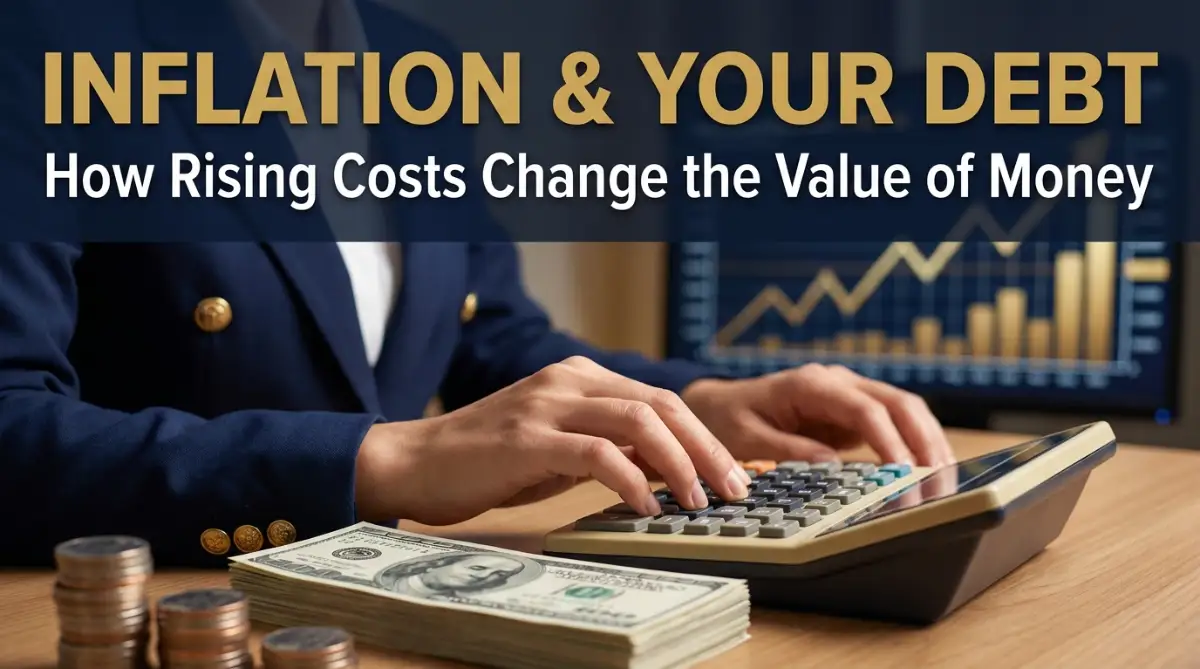
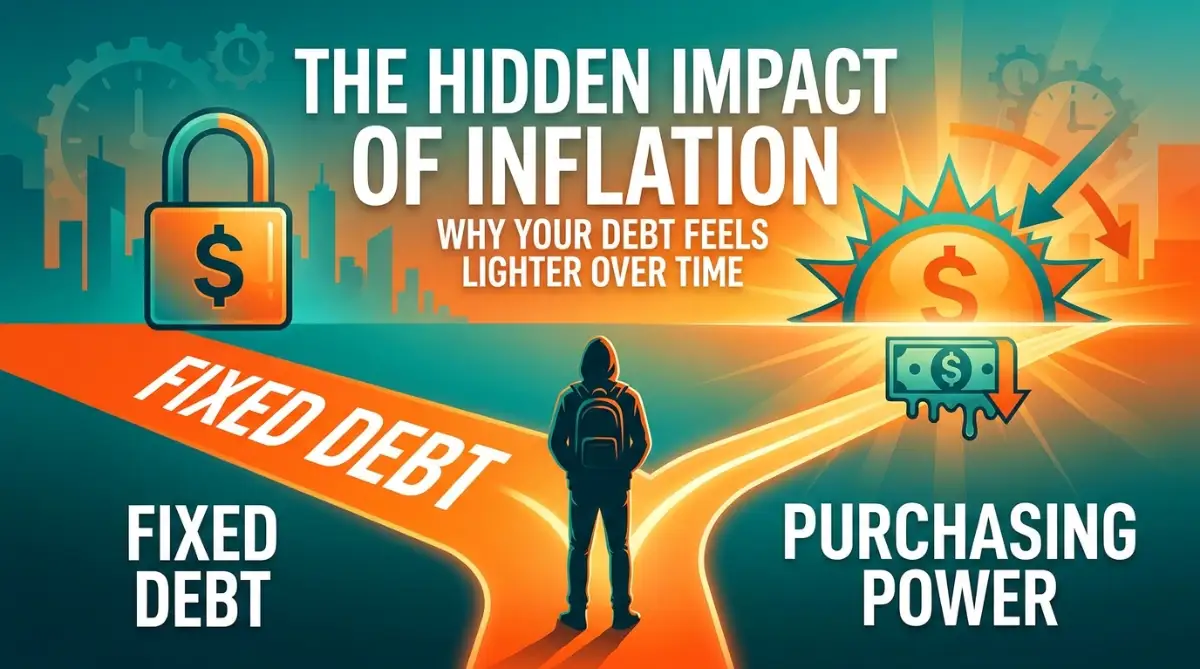
To understand how your debt changes, we need to look at Purchasing Power. Inflation simply means that money today is worth less than money tomorrow. If you owe a fixed amount of money, that amount remains the same, but the "real" weight of it drops as prices rise.
The Power of Fixed-Rate Loans
If you have a fixed-rate loan, you are actually in a strong position during periods of rising prices. Your monthly payment is locked in. Let’s say your payment is $500. Five years ago, $500 could buy you a full cart of groceries. Today, that same $500 might only buy half a cart.
Because your loan payment stays at $500, you are essentially paying back the lender with "cheaper" dollars. You are paying them back with money that is easier to earn but has less buying power than when you first signed the contract. This is the secret advantage of long-term, fixed-rate debt.
When Variable Rates Become a Danger Zone
The game changes completely if you have a variable-rate loan or a credit card with fluctuating interest. These loans are designed to keep up with the economy. If prices rise, banks often hike the interest rates on these products.
This is the opposite of the "fixed-rate benefit." Instead of your debt losing value, your debt is actually growing in size and cost. You are being hit twice—once by the cost of living and once by the increasing interest on your balance. If you are struggling with debt, identifying whether your rates are fixed or variable is your first and most important step.
Understanding the Interest Rate Gap
Think of interest rates as the "speed" of your debt growth. If your debt is growing at 20% and your salary is only growing at 3% due to inflation, you are falling behind. You need your income to outpace the growth of your debt.
Pro Tip: I once held onto a high-interest credit card because I thought it was "safe" to just pay the minimum. I realized later that I was paying more in interest than I was putting toward the actual debt. I switched to a fixed-term personal loan with a lower rate, and it saved me years of stress. Always look at the math, not just the monthly payment.
Strategic Moves to Navigate Your Debt
You do not have to be a genius to manage this. It just takes a shift in how you prioritize your payments.
Prioritize High-Interest Balances
Always aim to clear the debt that has the highest interest rate first. This is usually your credit cards or payday loans. Since inflation makes everything more expensive, you need to eliminate these "expensive" debts before they grow even larger.
Watch Your "Real" Income
If your salary isn't increasing at the same rate as inflation, you are effectively taking a pay cut. You have to be aggressive about protecting your income. This might mean asking for a raise or finding small ways to trim your fixed monthly costs.
Does Your Debt Help You or Hurt You?
Ask yourself this: "Is this debt for an asset that grows in value, or for something that loses value?" If you borrowed money for a home, that is an asset. If you borrowed money for a vacation that is already over, that is a memory you are still paying for. Focus on paying off the "consumption" debt first.
Is Consolidation Right for You?
If you have multiple high-interest debts, you might consider consolidation. This allows you to combine everything into one fixed-rate loan. It stops the variable interest from eating away at your budget.
Watch this video to understand how debt consolidation can simplify your life:
Build an Emergency Buffer
Even when you are focused on paying off debt, you need a small cash buffer. If an unexpected bill pops up, you don't want to use your credit card to pay for it. Using a credit card during an inflationary period is like digging a hole while you are already underground. Keep a small amount of cash aside, even if it means paying your debt off a little bit slower.
Long-Term Mindset vs. Short-Term Stress
It is very easy to feel panicked when you look at the news. Remember that economic cycles are natural. You are not the only one feeling the pinch. By keeping your debt fixed and your focus on high-interest targets, you are doing more than most people to protect your future. Stay steady, watch your numbers, and keep moving forward. You are building a stronger financial version of yourself every single day.
Mastering Your Financial Path: Smart Moves for Long-Term Debt Health
Managing your debt during times of economic change requires more than just paying your bills. It requires a proactive mindset. You have to treat your personal finances like a business you are running to protect your future.
Why Refinancing Could Be Your Best Secret Weapon
When the economy shifts, interest rates often move with it. If you have high-interest debt, check if you can refinance into a lower rate. This can change your monthly cash flow significantly. You can learn more about managing your personal budget to see if you have the space to make this move. By lowering your interest, you stop the debt from growing faster than you can pay it down.
The Art of Overpaying Strategically
You don’t have to wait until you have a huge lump sum to pay off your debt. Even an extra $50 or $100 a month makes a massive difference over time. By targeting the principal amount of your loan, you reduce the base on which interest is calculated. This is a proven way to skyrocket your credit score while simultaneously lowering your total debt burden. Small, consistent actions are what lead to massive results.
Shielding Yourself from Future Economic Volatility
The key to long-term success is to stop relying on debt for your basic needs. If you find yourself using credit cards just to buy groceries, you are stuck in a dangerous cycle. You should aim to build a "buffer fund." This fund isn't just for emergencies; it is for your peace of mind. Check out this guide on why your repayment isn't just luck to get a clearer picture of how interest works behind the scenes.
Why Transparency with Your Lender Matters
If you are struggling to make payments, don't just hide. Many lenders have programs to help you adjust your payment schedule if you are facing a temporary hardship. Communicating early shows you are responsible and want to pay back what you owe. You can find more advice on fixing your credit without new loans by looking at how you communicate with your creditors.
The Hidden Traps That Keep You in Debt
Many people fall into the "minimum payment" trap. When you only pay the minimum, you are barely covering the interest, and your actual loan balance stays high for years. This is a common mistake that keeps you paying money to the bank instead of keeping it for yourself. According to research from the Federal Reserve, consumer debt patterns often show that those who make minimum payments end up paying two to three times the original loan amount over time.
Ignoring the Reality of Variable Rates
Another huge error is ignoring the terms of your loan. If you have a variable interest rate, you are at the mercy of the market. When rates rise, your payment could spike without warning. It is a hidden financial toll of ignoring your loans that often catches people off guard. Always review your loan documents to know exactly when your rates might reset.
The Danger of Borrowing to Pay Debt
Never take out a new loan to pay off an old one unless you have a solid, mathematical plan to lower your interest. Taking on new debt often masks the underlying problem: your spending habits. If you are tempted to open a new credit line, stop before you sign and re-evaluate your actual monthly cash flow. It is much harder to dig your way out of a deeper hole.
Common Questions About Debt and Inflation
Does inflation mean my debt will disappear?
No, your debt won't disappear, but the "real" value of the money you pay back decreases over time. While this makes the debt easier to pay off, it only works if your income also rises with inflation.
Should I pay off debt or save money during high inflation?
It is a balance. You should pay off high-interest debt first, but keep a small emergency fund so you don't have to borrow more if an emergency happens. You can visit our resources at info2i to find more strategies for balancing your financial goals.
Is it better to have a fixed or variable rate loan?
In an inflationary environment, fixed rates are almost always safer. They protect you from rising interest costs, giving you a predictable monthly payment that you can budget for.
How do I know if my debt is too high?
If your monthly debt payments take up more than 30% to 40% of your take-home pay, you are likely overextended. This is a clear signal to pause new spending and focus on debt reduction.
Your Path to Financial Freedom Starts Today
You have the power to take control of your financial story. It starts by looking at your numbers today and making one small change. Maybe it’s cutting one subscription, or maybe it’s calling your bank to ask for a rate review. I know that looking at debt is hard, but I also know that you are capable of handling it. My own journey started with just one step of accountability, and I believe you can do the same starting right now.
Disclaimer: The content provided in this article is for informational purposes only and does not constitute professional financial, legal, or investment advice. Always consult with a qualified financial advisor regarding your personal situation. We are not responsible for any financial decisions made based on this content.